
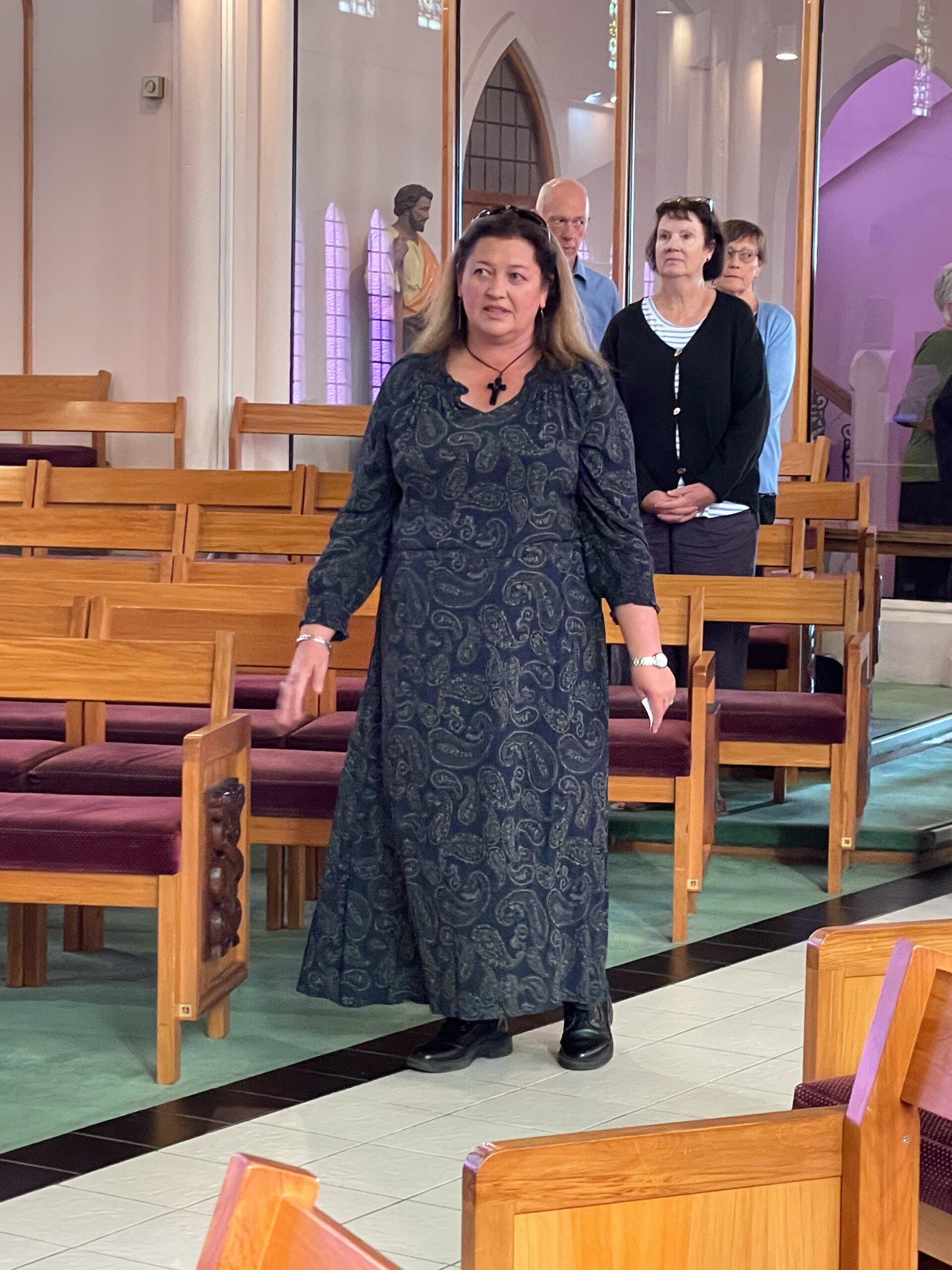
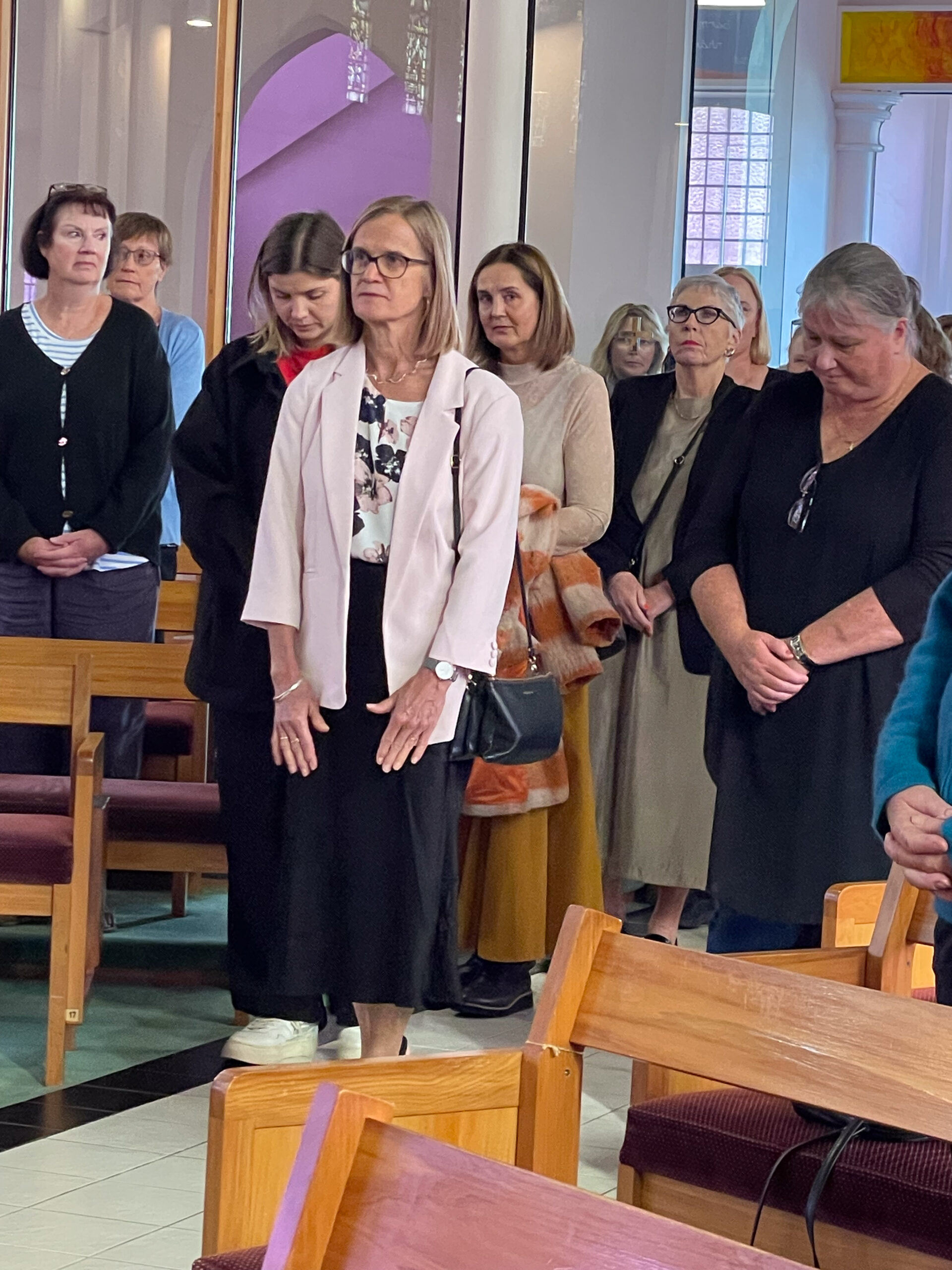
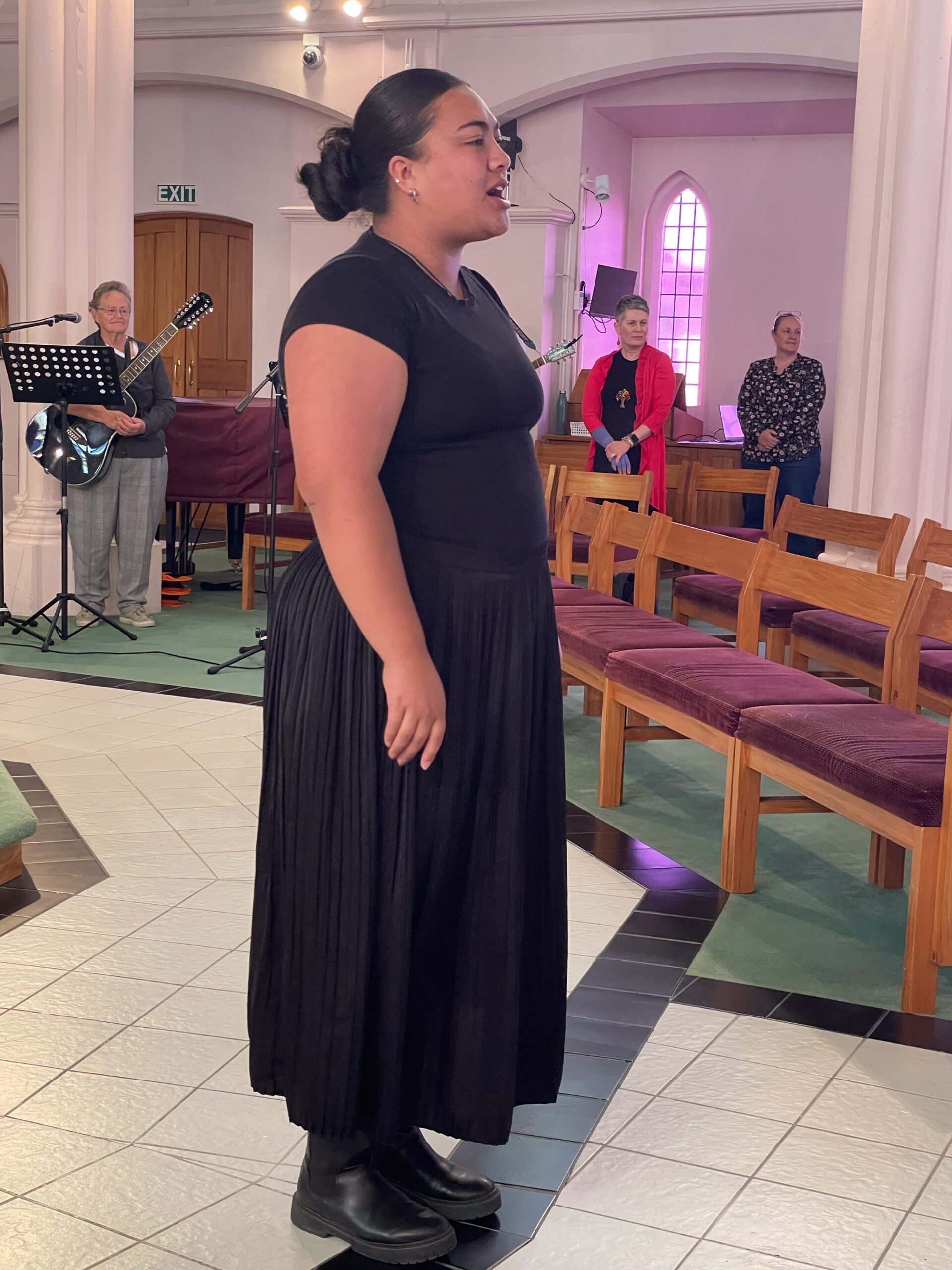
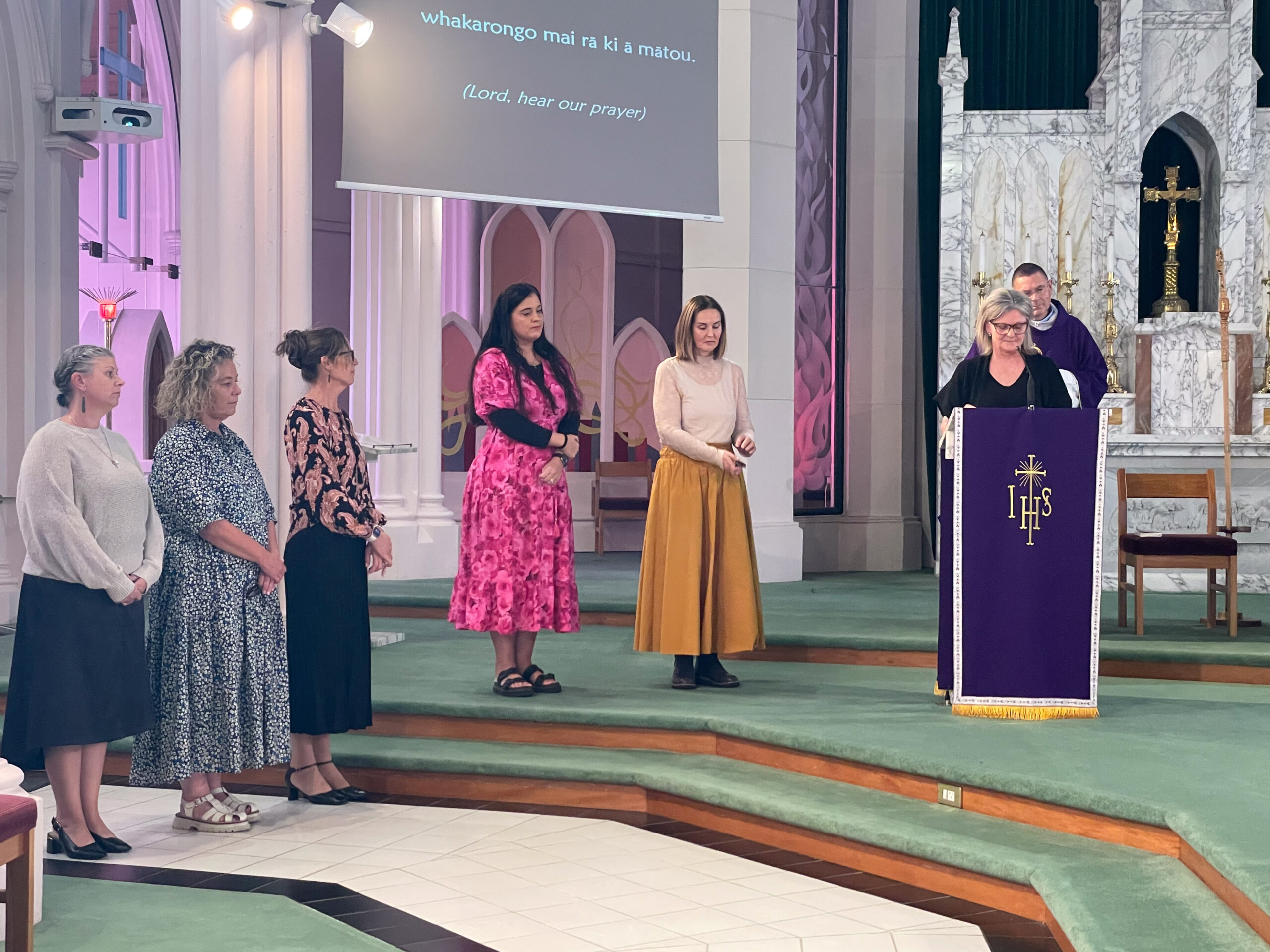
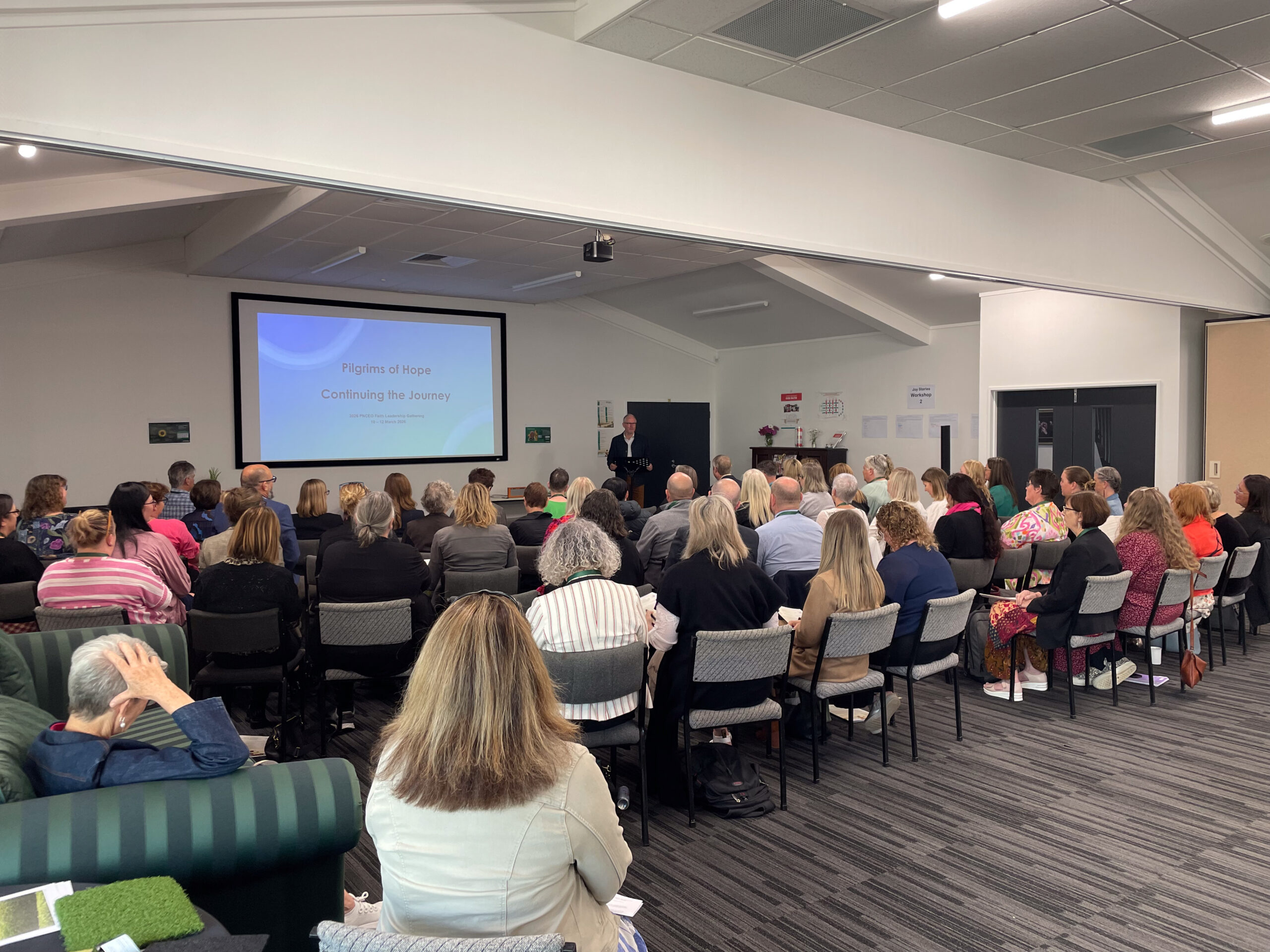
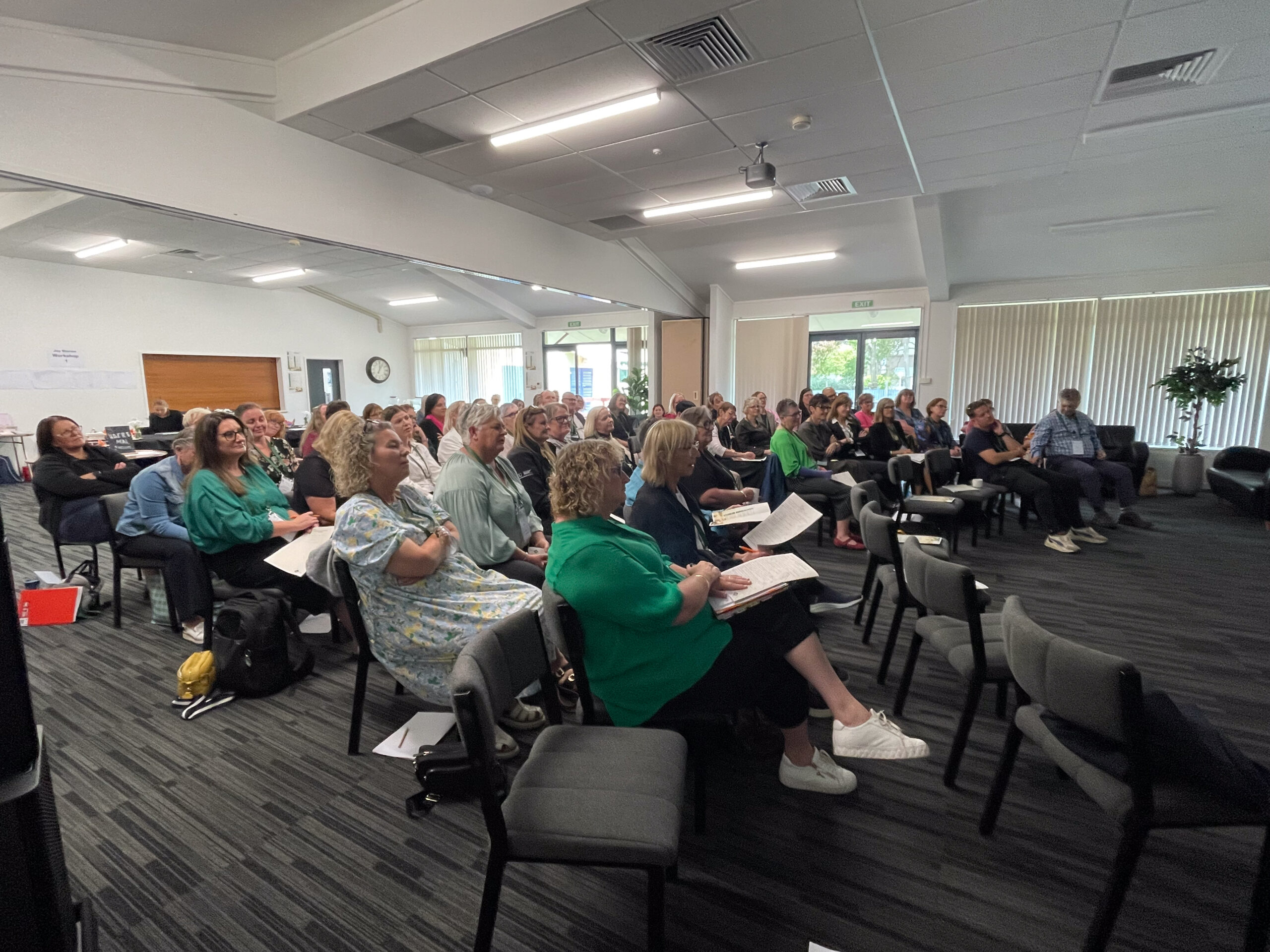
The Palmerston North Cathoic Education Office (PNCEO) Annual Faith Leadership Gathering once again provided a rich and life‑giving opportunity for Catholic principals, Directors of Religious Studies and HOD RE from across the diocese to come together in a spirit of encounter, connection, and shared mission. Guided by the theme “Pilgrims of Hope – Continuing the Journey,” the gathering affirmed the importance of safeguarding time to pause, reflect, and be nourished in faith and leadership.
Beginning with the celebration of Mass at the Cathedral of the Holy Spirit with Bishop John, we grounded our time together in prayer and Eucharist. This set the tone for the days that followed, reminding participants that our work in Catholic education flows from our relationship with Christ. Following Mass, whakawhanaungatanga was shared over a delicious meal at Te Rau Aroha.
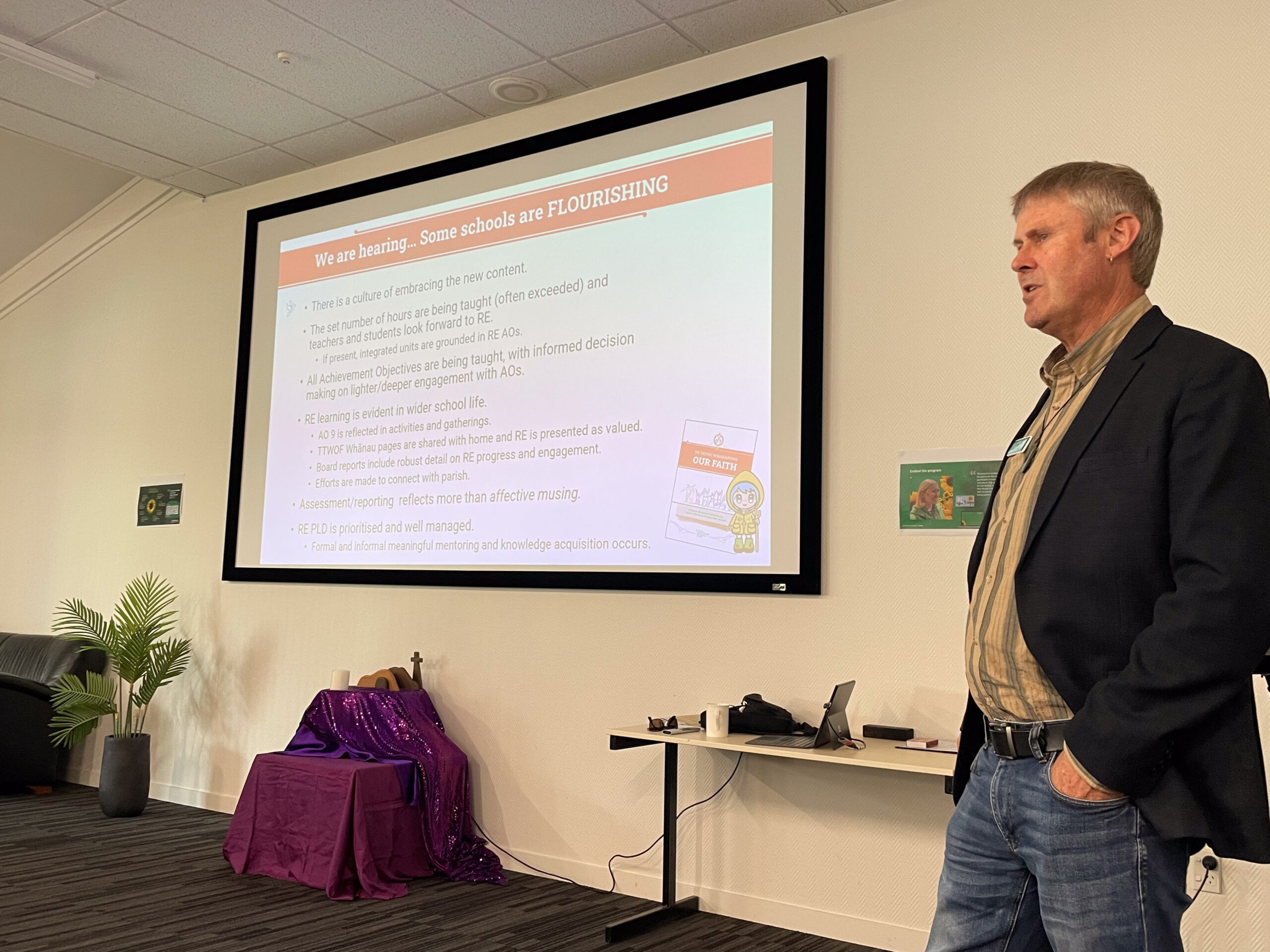
Highlights of the gathering included Ignatian spiritual nourishment led by Murray Adams, and thought-provoking input from keynote speakers: Dr Colin MacLeod, National Centre for Religious Studies, who spoke about ‘Stuck, Drifting Flourishing – RE in the Real World; and Fr Mark Walls SM, whose address was titled “The Kingdom of Niceness or The Kingdom of God”.
A new initiative this year was the inclusion of joy story workshops. Introduced by a short and engaging video clip from David Wells, the joy stories affirmed the good work already happening in schools and provided encouragement, inspiration, and hope.
The gathering also provided the opportunity for updates from the Diocesan Office from our General Manager, Property Manager, Account Manager and Leader and Advisor of Inclusiveness.
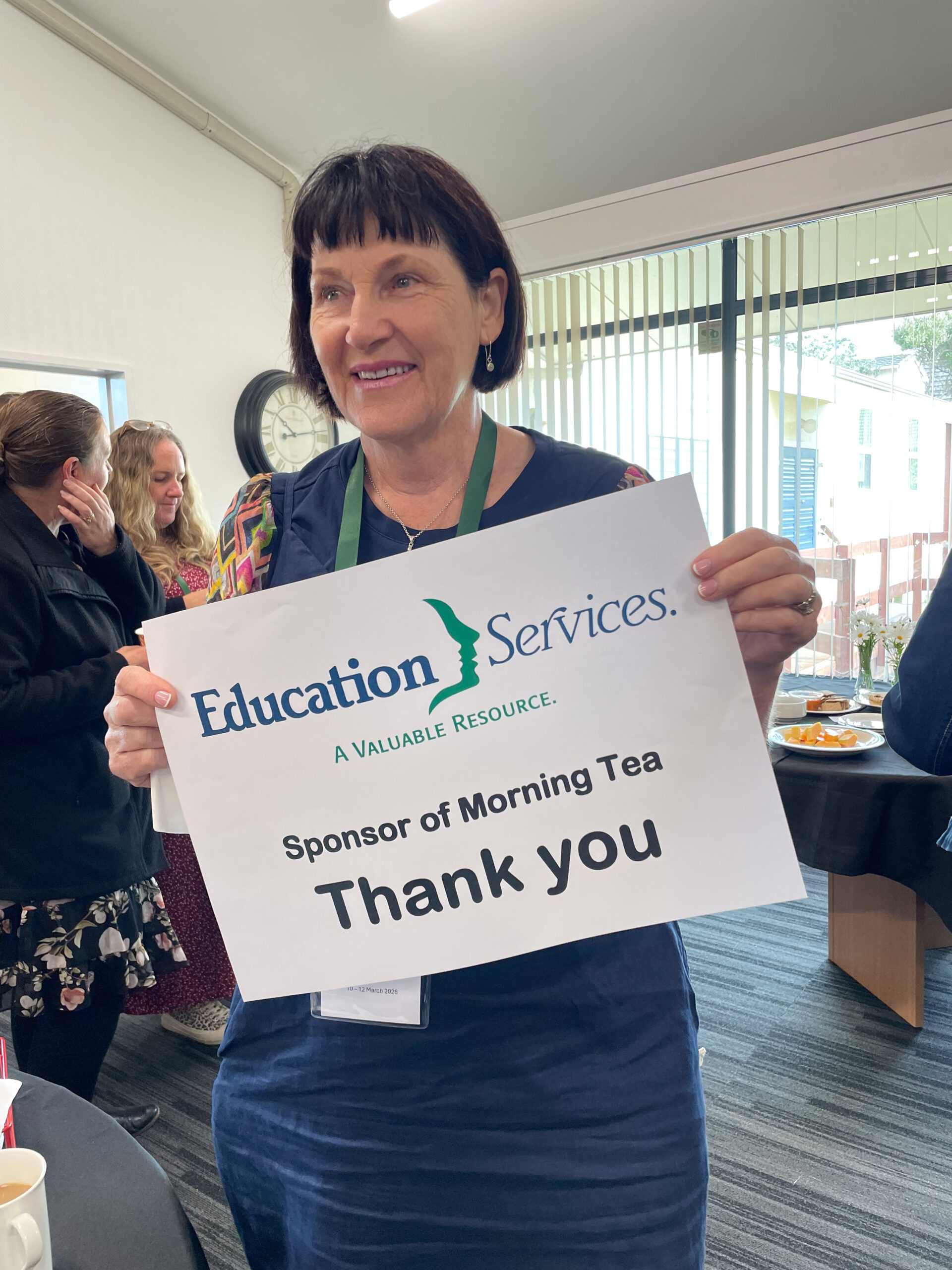
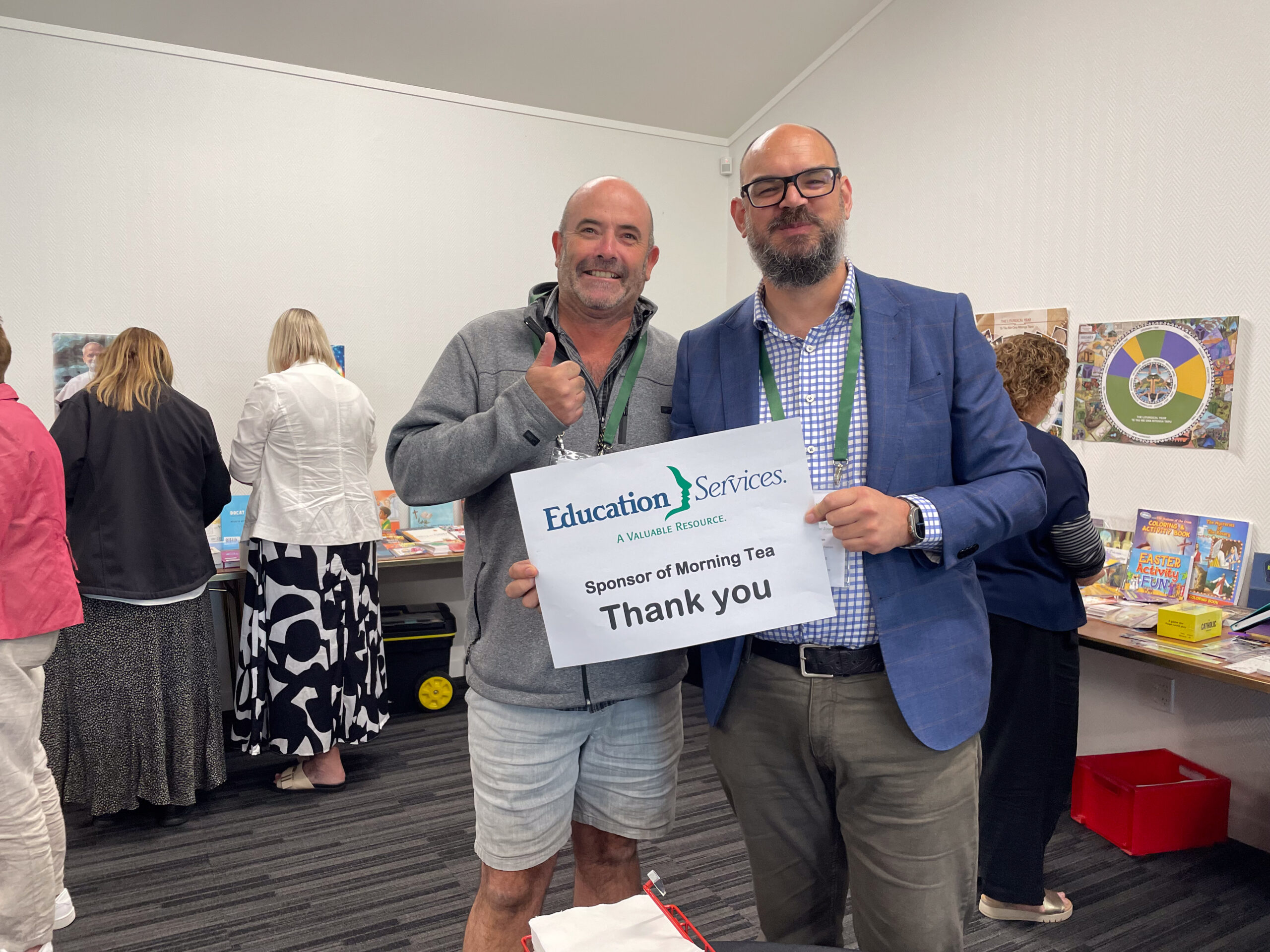
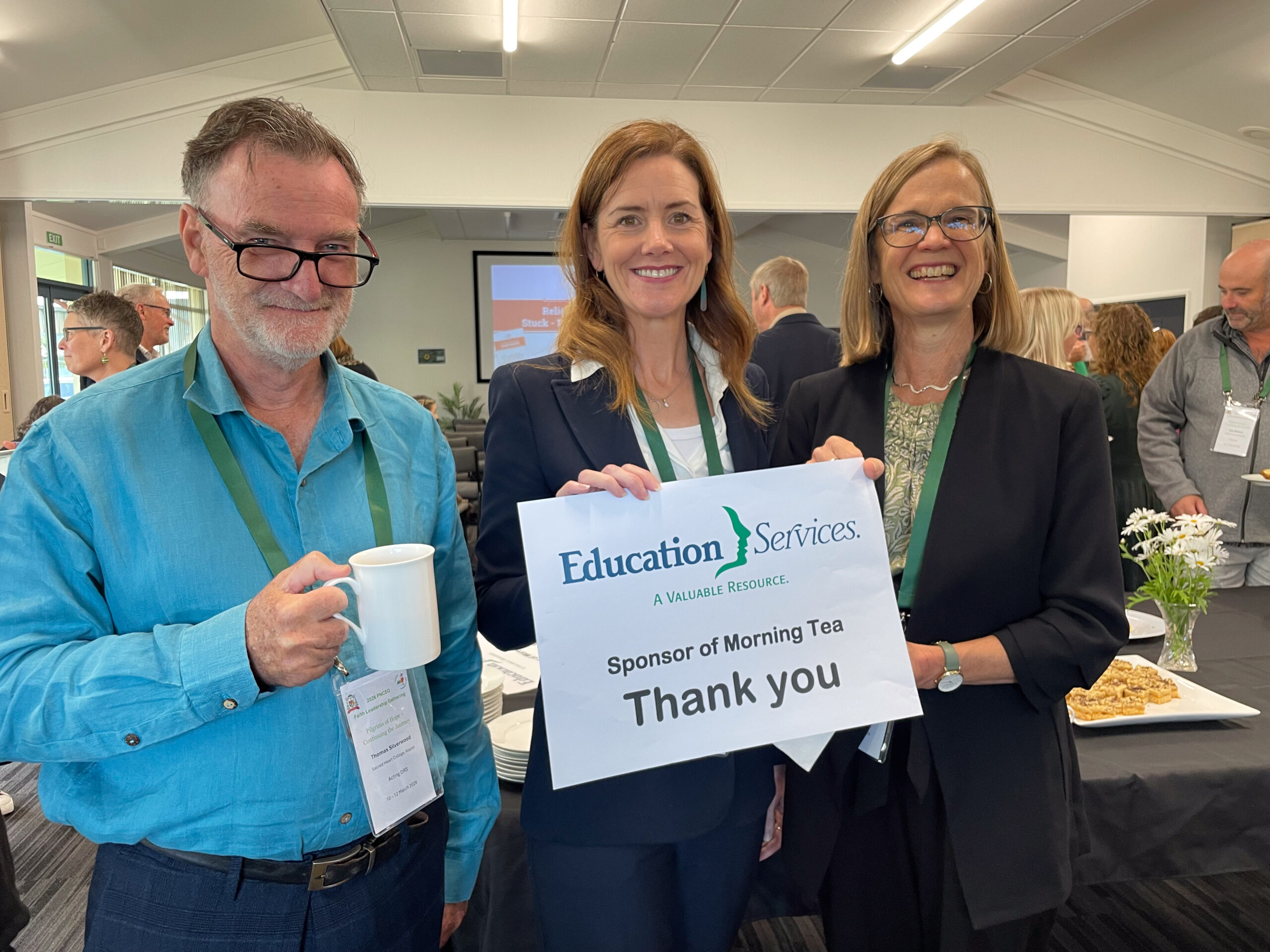
The PNCEO is deeply grateful for the generous sponsorship that supports this annual even,t especially BSM Group Architects LTD and Tiger Turf.
It was wonderful to have the presence of Pleroma Christian Supplies, whose resources continue to enrich faith formation in our schools.
It is always a pleasure to host our faith and education leaders each year. We sincerely thank Principals, DRSs and HOD RE for safeguarding this important time, for their openness to encounter, and for their ongoing commitment to leading our schools as pilgrims of hope, continuing the journey together in faith.
Encounter First: Schools and the Renewal of the Parish
Reflections from the PNCEO Faith Leadership Gathering
by Emily Sit, Director of Mission and Evangelisation
Recently I had the privilege of speaking at the PNCEO Faith Leadership Gathering — a gathering of principals, DRSs, and faith leaders from across our Catholic schools. The topic was Encounter First: Schools and the Renewal of the Parish.
A Story Worth Telling
I began with a story from my time in parish ministry. One Sunday a young family came to Mass for the first time in a long time. After Mass I asked what had brought them. They told me their child had started at a Catholic school — and something had begun happening at home. Their child was asking questions. About Jesus. About prayer. About church.
The invitation to return did not come from a priest. It came through the life of the school. A teacher, a prayer, a moment of faith had sparked something — and that spark drew a whole family back toward the Church.
Sometimes renewal begins in places we might not expect — even in a classroom.
The Moment We Are Living In
Across many parts of the Church today, parish life is changing. In many places fewer people are attending Sunday Mass. But at the same time, thousands of young people and families continue to walk through the doors of our Catholic schools every day.
For many families, the first place they encounter the Church is no longer the parish. It is the school. In some ways our schools have already been asking the questions that many parishes are only beginning to ask again — about discipleship, encounter, and what it means to help someone come to know Christ.
The Road to Emmaus
I find myself returning often to the story of the road to Emmaus. Two disciples, confused and disappointed, walking away from Jerusalem. And then Jesus comes alongside them. He listens. He opens the Scriptures. Their hearts begin to burn. And finally they recognise him in the breaking of the bread.
Our schools can be places like that road — where young people are accompanied, where questions are welcomed, where hearts begin to awaken. But the journey does not end on the road. It leads toward the Eucharist, and toward the life of the Church.
A Question Worth Sitting With
Towards the end of our gathering, an honest and important question emerged: how do we actually bridge school and parish?
There is a real tension here. Sacramental preparation often happens most naturally in the school — it is where students feel known and safe, where relationships are already formed. Celebrating sacraments in that familiar environment makes sense pastorally. And yet the parish is where the sacramental life of the Church is rooted. The community gathered around the altar, the font, the confessional — that is the home the sacraments are meant to lead young people into.
So the question is not simply where sacraments happen. It is about what we are preparing young people for. If school is the road to Emmaus, the parish is Jerusalem — the community they are meant to return to.
Perhaps the bridge is not a programme but a relationship — schools and parishes walking together so that what begins in the classroom can find its home in the community.
This will look different in different places. Some parishes and schools already have strong bonds. Others are only beginning to find each other. But the desire is there — and that is a good place to start.
The Invitation
Our task together — schools, parishes, and diocese — is to create spaces where young people encounter Jesus. The hope from the diocesan mission work is not to add more to what schools are already carrying. It is simply to walk alongside, so that the encounters happening in our schools can lead people more deeply into the life of the Church.
Because where encounter happens, renewal begins.