When I look back over the years, I recall the summers of the past as long, hot, sunny days, one after another. They “seemed to last forever”, as we hear in the chorus of Bryan Adams’ Summer of ’69. But this year, this summer of ’25/’26, has been very different. Rain and low temperatures have disrupted our beach trips and spoiled our BBQs. We’ve experienced high winds, floods, electrical storms, and some very gloomy days. Clearly, the seasons don’t always match our hopes and expectations.
Meanwhile, on the other side of the globe, Pope Leo has been calling us to return to the documents of the Second Vatican Council — a pivotal event in the life of the Church that took place from 1962–1965. “The work of the Council Fathers”, Pope Leo said, “paved the way for a new ecclesial season, placing at its centre the mystery of salvation and the unity between God and his people.”
The intention of our leaders at Vatican II was to guide the Church into a new “season”. And what were their hopes and expectations? As we see in the opening paragraph of the first document of Vatican II, Sacrosanctum Concilium, the aim of the Council was to:
- impart greater vigour to the Christian life
- adapt the Church’s institutions to the needs of our times
- unite all those who believe in Christ
- call all mankind into the household of God
We are now 60 years into this new season. What sort of conditions do we see? Have the hopes of the Council been realised? While everyone will have their own responses to these questions, Pope Leo is calling us to “reread” the documents of the Council.
“[As we] continue to seek ways and means to implement its insights, it will be important to get to know it again closely, and to do so not through ‘hearsay’ or interpretations that have been given, but by rereading its documents and reflecting on their content.”
(Pope Leo, General Audience, 7 January 2026)
For many of us, this will mean reading them for the first time. To ensure that we have the support and encouragement we need, there are opportunities around the Diocese this year to gather in our Diocesan Hubs and experience this rereading together.
While we all come with our own unique points of view, the beauty of the Diocesan Hubs is that we can read the Vatican II documents alongside our brothers and sisters in faith, and in the light that comes from the Holy Spirit. The Dio Hub format aims to reflect this, with generous amounts of time given to listening to the Holy Spirit, sharing with one another, asking questions, giving feedback, and discerning together. I believe this spirit of docility to God, and openness to one another, is just as important as the content itself. It is the renewing of our minds (Rom 12:2) that will enable us “to be attentive interpreters of the signs of the times, and to proclaim the Gospel to all.”
As I look up from my laptop and gaze out my window, the weather is grey, gloomy, and damp. Summer is blending into autumn, and some of the leaves are beginning to change colour. Still, thanks to the wet summer, the grass remains lush and the apple trees are still laden with fruit. So too, here in the Church in New Zealand, I see new signs of life — more people enquiring about the Catholic faith, new initiatives and networks forming in the Church, young people growing in faith, and an increasing hunger for renewal in our parishes.
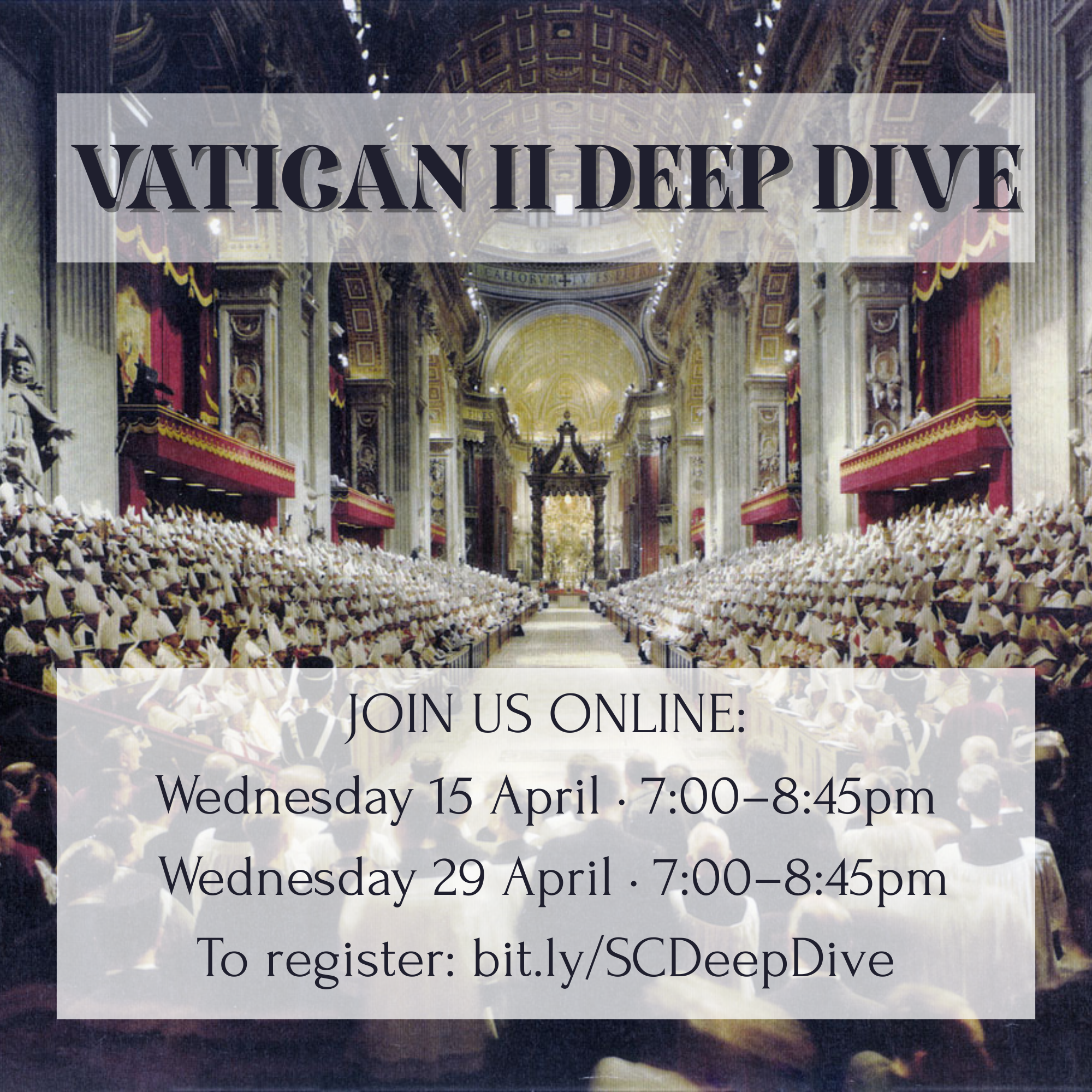
I invite you all to attend our online Deep Dive sessions on April 15 and 29, as we continue to explore the riches of the liturgy in Sacrosanctum Concilium. I also hope to see you in person at our next Diocesan Hubs on May 30 (Whanganui) and 31 (New Plymouth). There, we will begin to delve into another key document of Vatican II, Lumen Gentium, on the mystery of the Church.
As this new season in the Church continues to unfold, let’s take this opportunity to read the documents of Vatican II, to return to the roots of this new fruitfulness, and to be transformed together in Christ.