
Suzanne Aubert arrived at Port Ahuriri on 15 February 1871 to commence her life as a missionary, nurse, pharmacist, teacher, and linguist. She established a trusted presence among the Māori of Heretaunga where she is affectionately known as Mēri Hōhepa Mary Joseph.
Mēri Hōhepa did not wear religious habit, but a grey skirt and plain-fitting blouse, a cape that reached to her waist, and a straw hat with a gossamer veil. Under the skirt were large detachable pockets tied round her waist, and in this way, she went wherever there were Māori to be instructed or sick to be nursed, walking thousands of miles from the Mission Station at Meeanee to the villages of Heretaunga.
At Meeanee, Mēri Hōhepa produced medicines on a large scale, combining western chemistry with Māori medicinal lore in a makeshift dispensary with ingredients harvested from wetlands, riverbanks, and forests around Napier. The efficacy of these medicines spread with large numbers of Māori congregating at the doors to St Mary’s Church, waiting for their nurse to appear each day. In her first year alone Mēri Hōhepa cared for over 1,300 people and throughout her time was instrumental to saving lives during epidemics of typhoid, influenza, measles and tuberculosis.
Described as a Sister of Mercy, Mēri Hōhepa obtained permission to stay with Kereopa Te Rau in his cell at Napier Prison before execution on 5 January 1872. He was wrongly accused of murdering Reverend Karl Volkner at Ōpōtiki, and despite pleading with him through the night, he would not profess innocence. Kereopa Te Rau was officially pardoned in 2014.
In 1873, a school opened for Māori and European children at Meeanee where Mēri Hōhepa took French lessons, singing tutelage, and religious instruction. During this time, she was entrusted with revising and enlarging the Māori prayer book and lectionary Ko te Ako me te Karakia o te Hāhi Katorika Romana, a two-year project to produce 300 copies printed in Napier at her own expense.
With medicines and prayer books, Mēri Hōhepa was able to evangelise, cure, and teach with regularity from village to village, maintaining relationships and strengthening the Catholic faith in each community.
The largest flock was based at Pakipaki, where a significant turning point took place in 1878 with a hui called by the chief Urupene Pūhara. The purpose was to discuss collective conversion to the Church of England. Mēri Hōhepa reminded Urupene of his father Pūhara Hawaiikirangi, the first benefactor of the Māori Mission at Pakowhai, who was baptised in his own blood before death on the battlefield of Pakiaka in 1857. She encouraged Urupene to remain Catholic, and promised to build a church, and to bring a priest to reestablish the Māori Mission.
Mēri Hōhepa kept her promise with the arrival of Father Christophe Soulas SM in 1879, and shortly afterwards, the opening and blessing of the Church of the Immaculate Conception at Pakipaki on 8 June 1880. To support Father Soulas, a French-Māori phrase book was compiled, which she later published as the New and Complete Manual of Māori Conversation.
For her final three years in Hawke’s Bay, Mēri Hōhepa resided in Pakipaki to strengthen the Mission there, with a schoolhouse and presbytery built alongside her little Church. During this time a group from Whanganui saw the work Mēri Hōhepa had done in Pakipaki and wanted the same for their own people, so a formal request was put to the chiefs and the path was laid – by the people, and the Bishop – for Mēri Hōhepa to travel to Hiruhārama to revive the Māori Mission there.
The entry in her Aide Memoire for 24 June 1883 simply states, “I am leaving Meeanee” without formal farewells. Mēri Hōhepa left Hawke’s Bay and on 2 July passed through the Manawatū Gorge on her way to Whanganui. She would quote in her letter writing: “My 12 years in Hawke’s Bay were the happiest time of my life.”
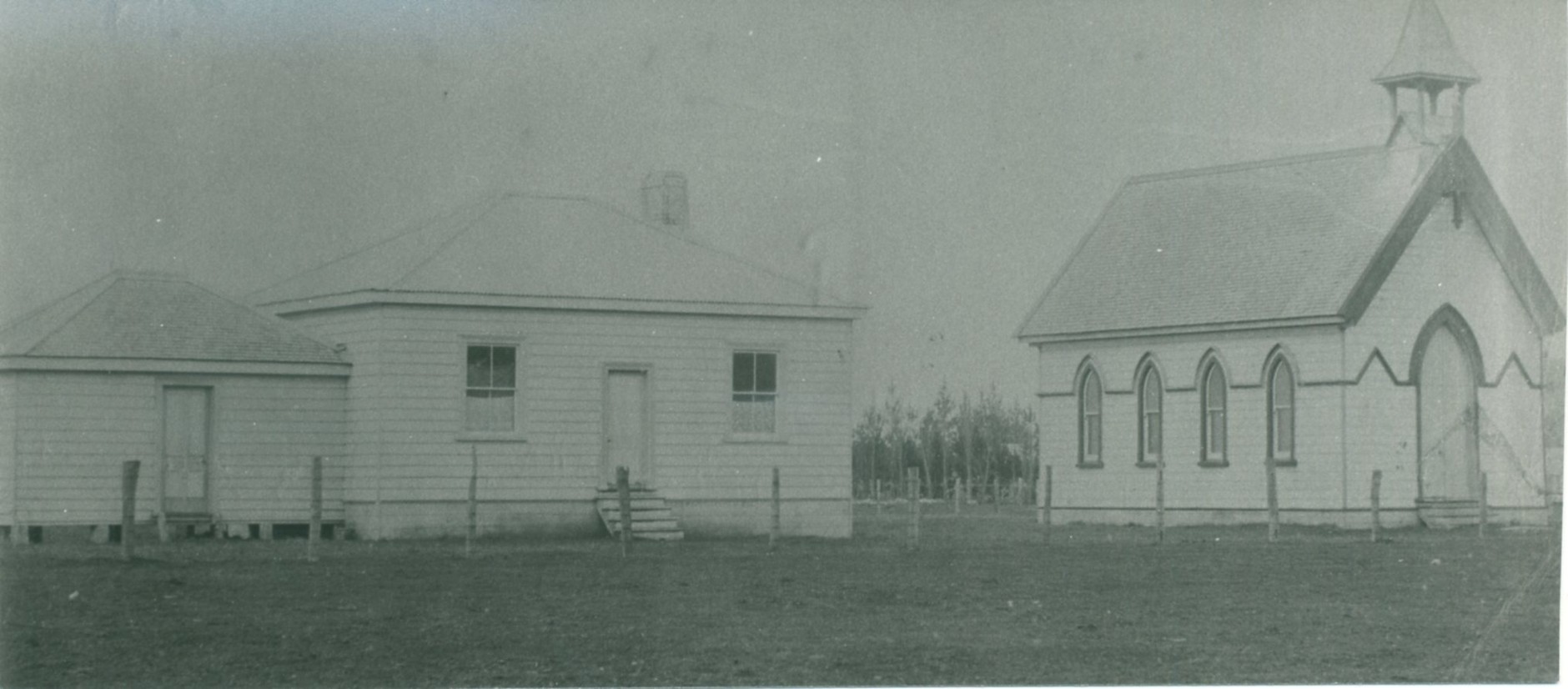
Pakipaki Māori Mission c.1885 showing L-R the Dispensary, Schoolhouse & Presbytery, and Church of the Immaculate Conception.