
The Catholic world entered a time of mourning and transition following the death of Pope Francis and the election of his successor, Pope Leo XIV.
Pope Francis, remembered for his humility, global outreach, and emphasis on synodality, died on 21 April 2025 after more than a decade of influential leadership. In his place, the College of Cardinals elected 69-year-old American Cardinal Robert Francis Prevost, who has taken the name Leo XIV.
In the weeks since, Catholic leaders in Aotearoa New Zealand have reflected on both the legacy of Pope Francis and their hopes for Pope Leo’s pontificate.
New Zealand Catholics react to Pope’s Death
In the days following the death of Pope Francis, Bishop Steve Lowe, president of the New Zealand Catholic Bishops Conference, expressed the sorrow and prayers of New Zealand’s Catholic community. He said Catholics across the country were praying for the repose of the Pope’s soul and giving thanks for his life of servant leadership.
Bishop Lowe noted Pope Francis’ historic significance as the first non-European pope in over a millennium and the first from the Southern Hemisphere. Despite never visiting New Zealand, the pope’s commitment to reaching people in all parts of the world was deeply felt, especially through his visits to regions such as Papua New Guinea, Mongolia, and Indonesia.
The bishop emphasised Pope Francis’ enduring impact on the Church, particularly his focus on listening, dialogue, and discernment. “New ways of engaging with one another and new styles of leadership have emerged and are emerging,” Bishop Lowe said. “We will have Pope Francis to thank for much of that renewal.”
Following his death, Catholic communities around New Zealand held special Masses to honour the late pontiff. Bishop Lowe invited not only Catholics but also people of all faiths to join in prayer, reflecting the pope’s inclusive spirit.
Sacred Heart College students reflect on Pope Francis’ legacy
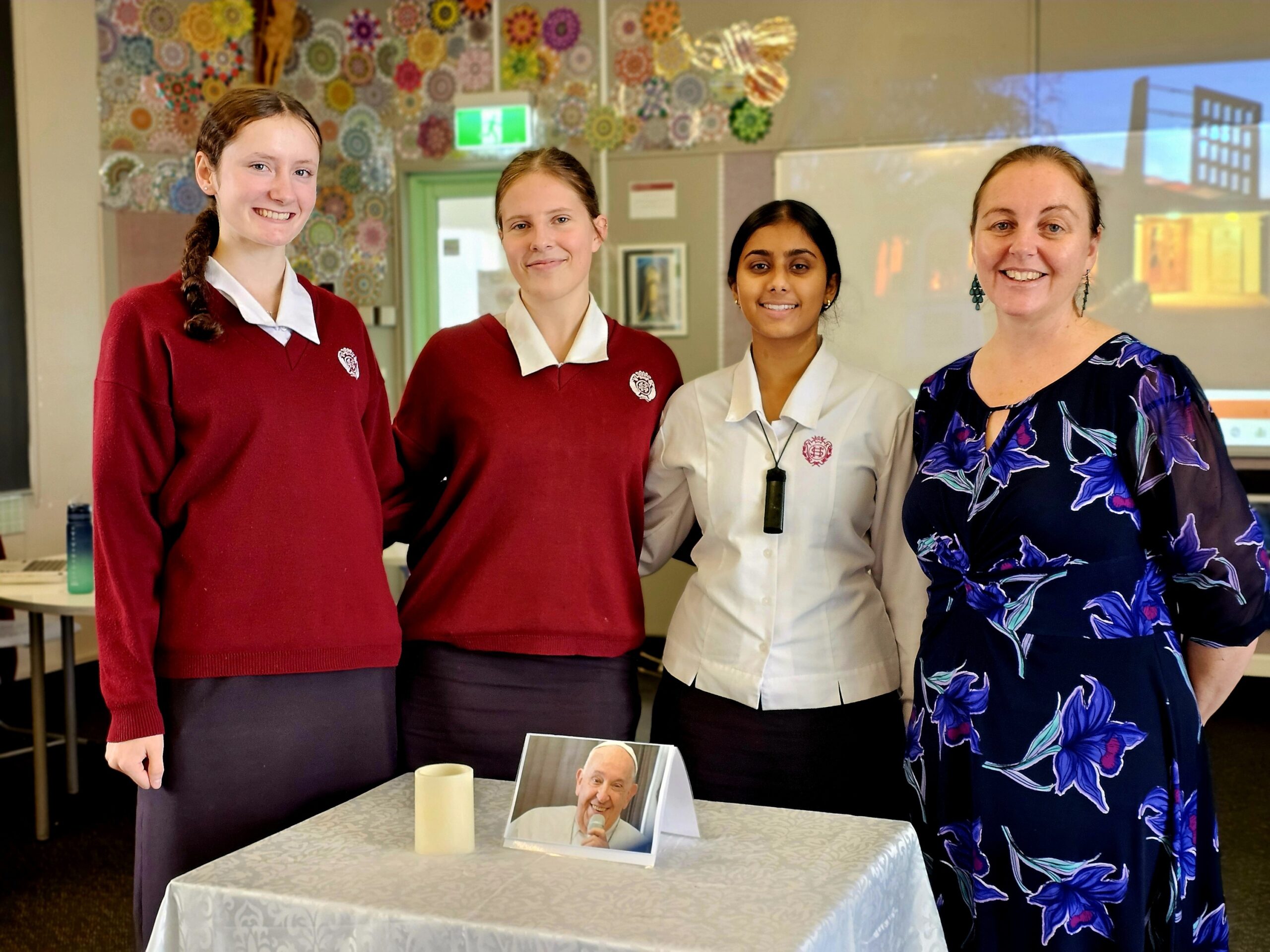 Sacred Heart College Napier students and staff have commemorated the death of Pope Francis through liturgy, reflection and classroom learning.
Last week, the school community came together for a liturgy led by Catholic Character Leaders Sabine Toomer and Sophia Unwin, with guidance from Director of Special Character Tom Silverwood. Throughout the week, students and staff wore white ribbons as a shared symbol of remembrance and respect.
Head Girl Sneha Jenson said the occasion carried particular significance for students, many of whom had known no other pontiff.
“It’s definitely been a meaningful experience for us, because Pope Francis is the pope we’ve grown up with,” Sneha said. “During our liturgy, we focused on his idea that the church isn’t a museum for saints, but a hospital for sinners. That really resonated with our generation.”
Sacred Heart College Head of Religious Education Kelly Briggs said Pope Francis’ teachings continue to shape classroom learning. His encyclical Laudato Si’, which links care for the environment with social justice, features prominently in senior assessments and discussions.
“Francis taught us that caring for the earth and addressing poverty go hand in hand. His message continues to challenge students to think critically about the world around them.”
As part of their NCEA assessments, Year 11 students wrote personal reflections on Pope Francis’ legacy. One student described him as “like the Good Samaritan,” referencing his request that the poor and vulnerable be the first to see his casket at his final resting place. Another noted his commitment to peace, highlighting the moment during his funeral when President Trump and President Zelensky engaged in civil conversation.
Sabine and Sophia said the Pope’s values had encouraged students to act with compassion in their everyday lives.
“We’re not only remembering Pope Francis, but we’re also trying to live out what he taught us about caring for others,” Sophia said.
Senior students have also explored the process of electing a new pope known as the Conclave.
Mrs Briggs said the conclave has offered a valuable opportunity to understand the traditions and decision-making processes of the Catholic Church, particularly as it is a new experience for students.
“As students follow this in real time, it brings their learning to life,” she said.
With the official mourning period now concluded, the school continues to reflect on Pope Francis’ legacy and the values he promoted.
“This has been a powerful moment for us all. It’s helped us better understand what it means to lead with compassion and humility.”
Sacred Heart College Principal Maria Neville-Foster said the passing of Pope Francis had been felt deeply by the school community.
“We are deeply saddened by the loss of Pope Francis. His humility, courage, and unwavering compassion touched hearts across the world, including here at Sacred Heart College. We are grateful for the leadership he brought to the Catholic Church and the hope he offered to those who needed it most. May he rest in peace.”
Photo caption: Sacred Heart College Head of Religious Education Kelly Briggs (right) with Catholic Character Leaders Sophia Unwin (left) and Sabine Toomer, and Head Girl Sneha Jenson
National Requiem Mass held in Palmerston North
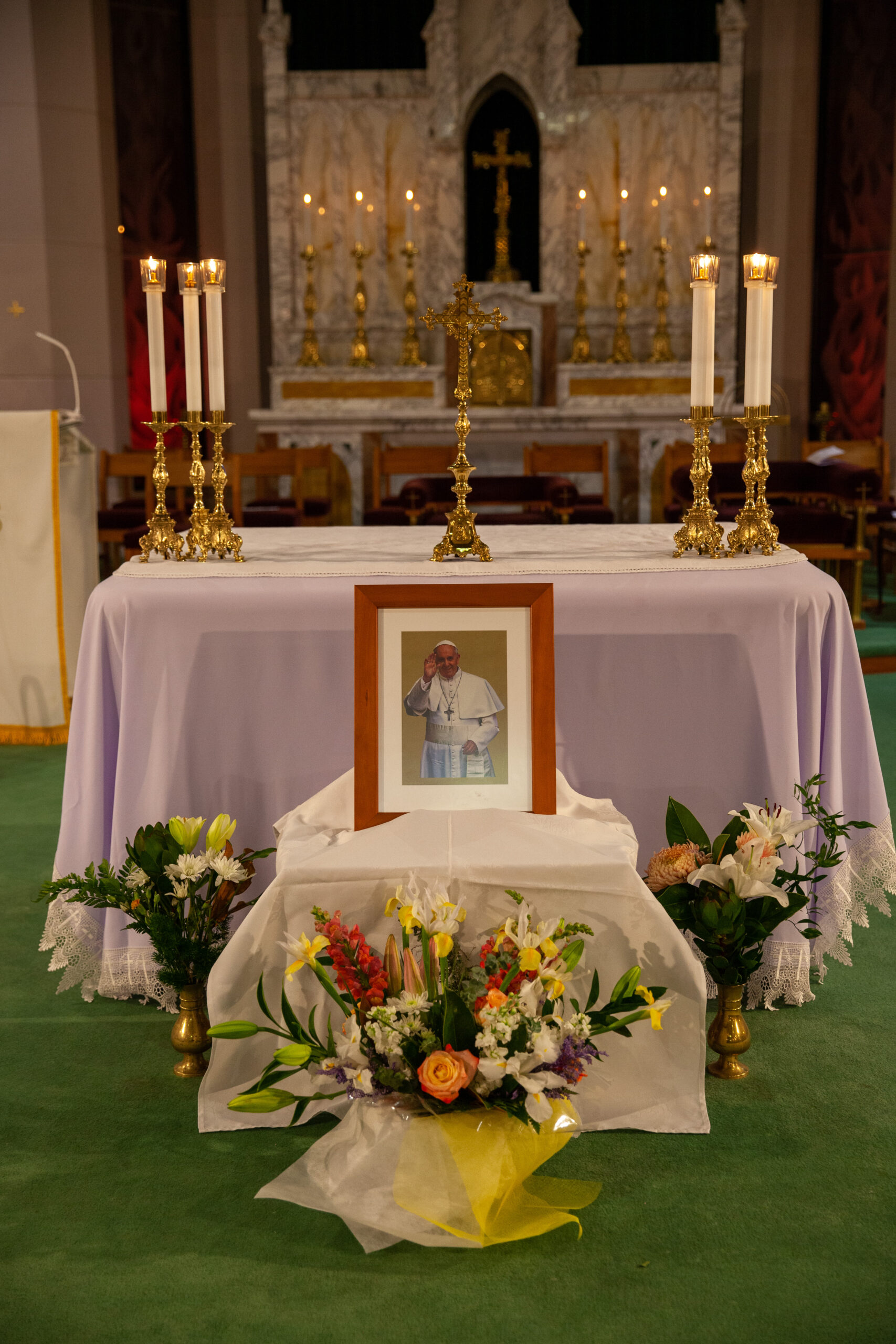
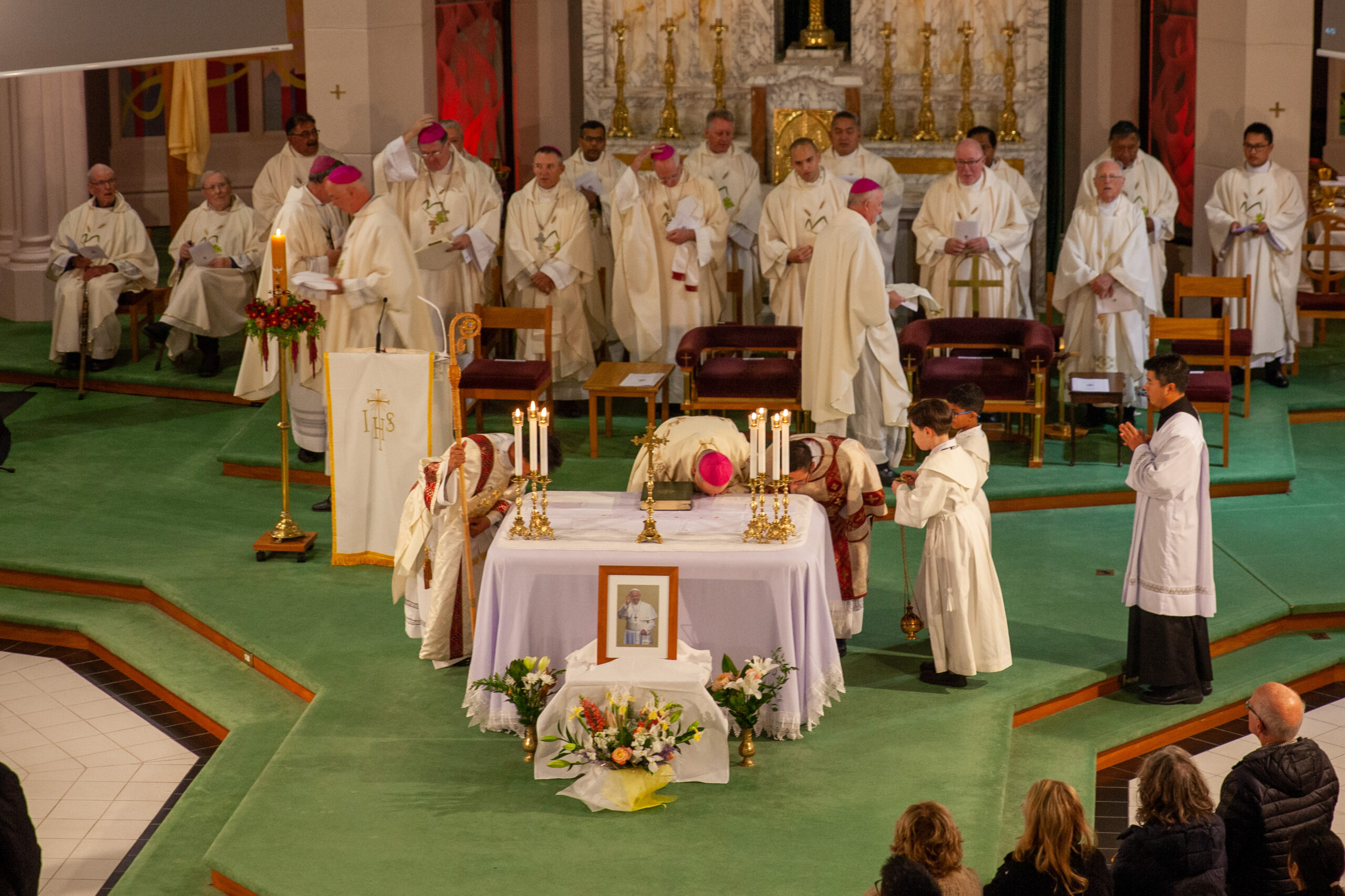
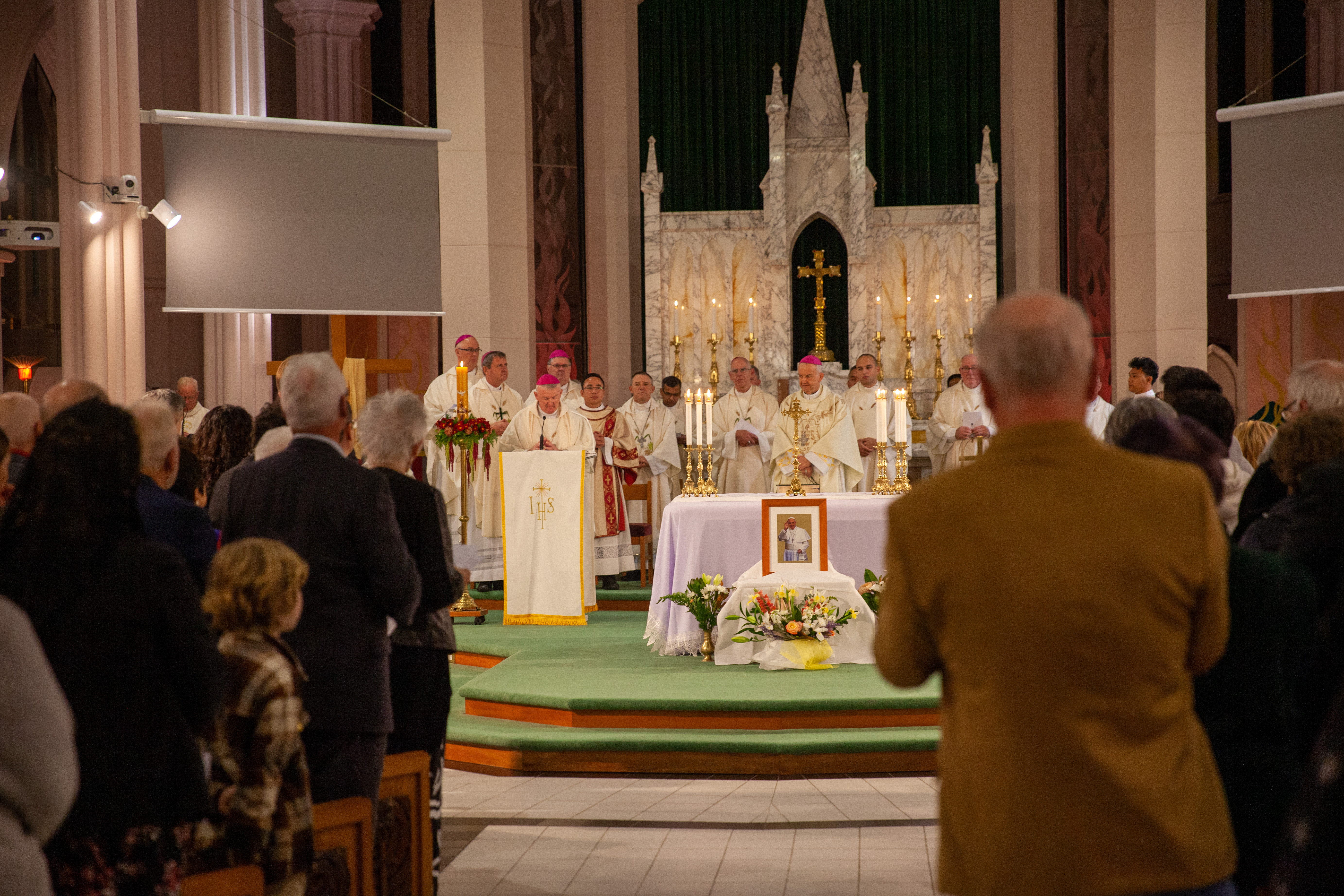
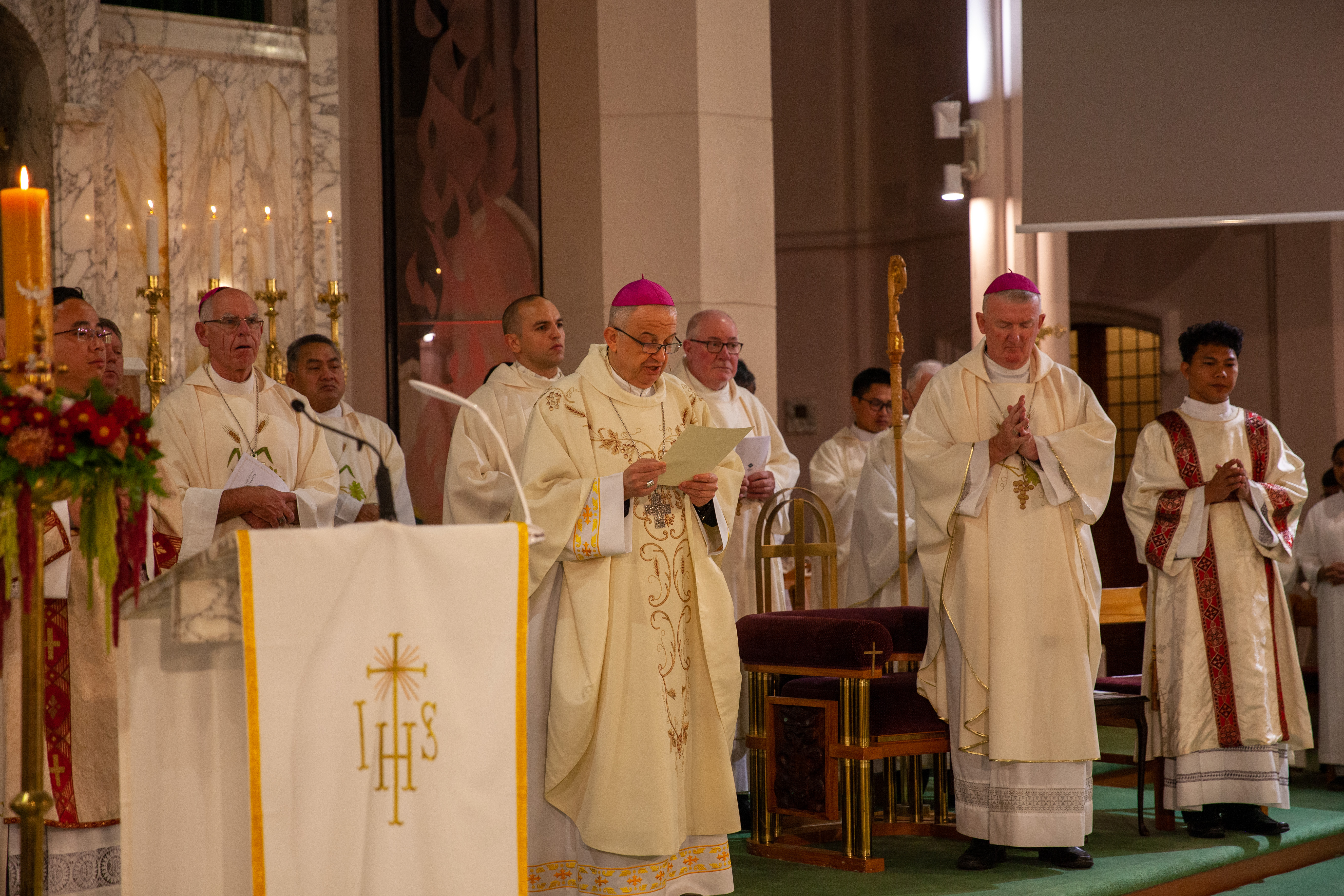
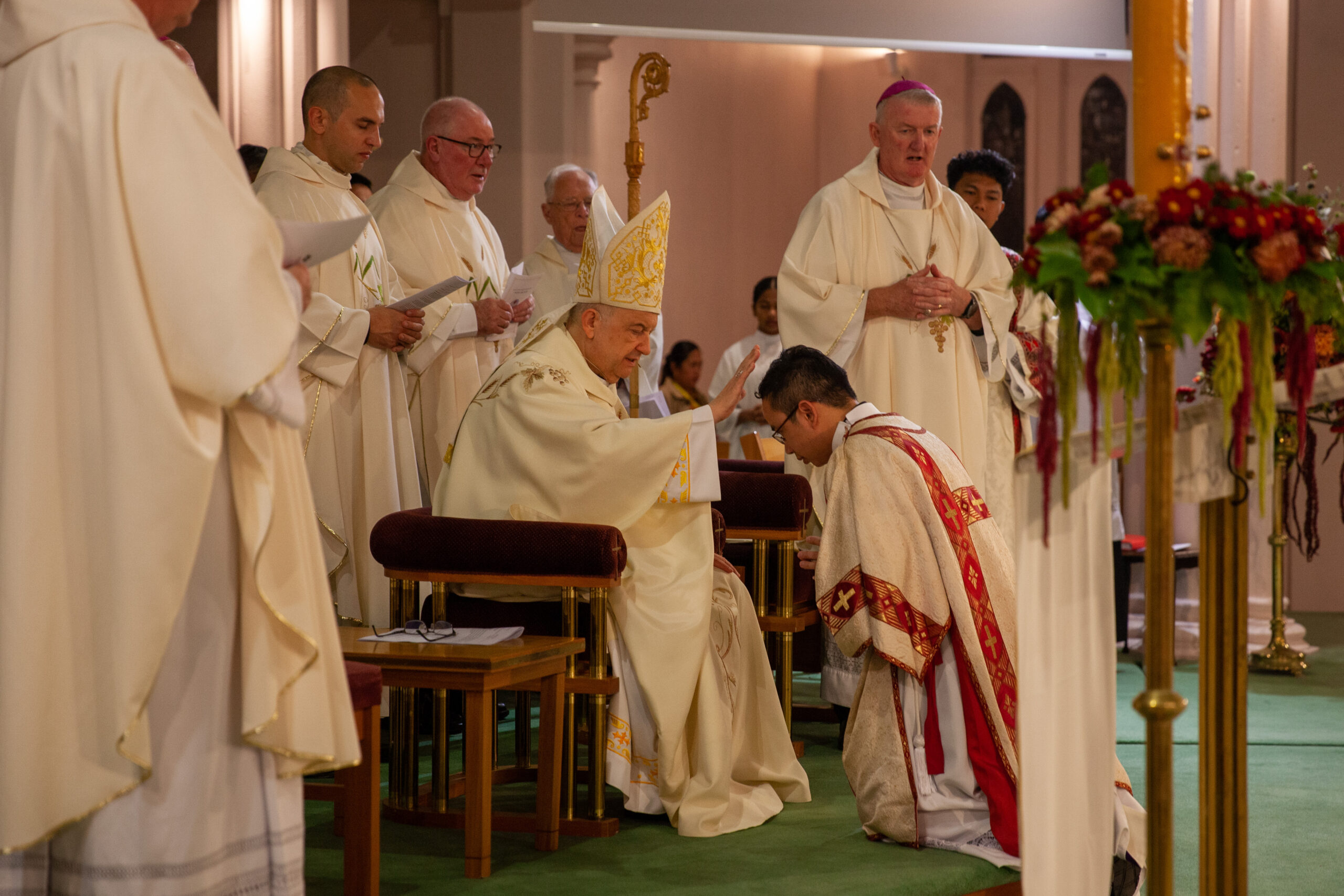
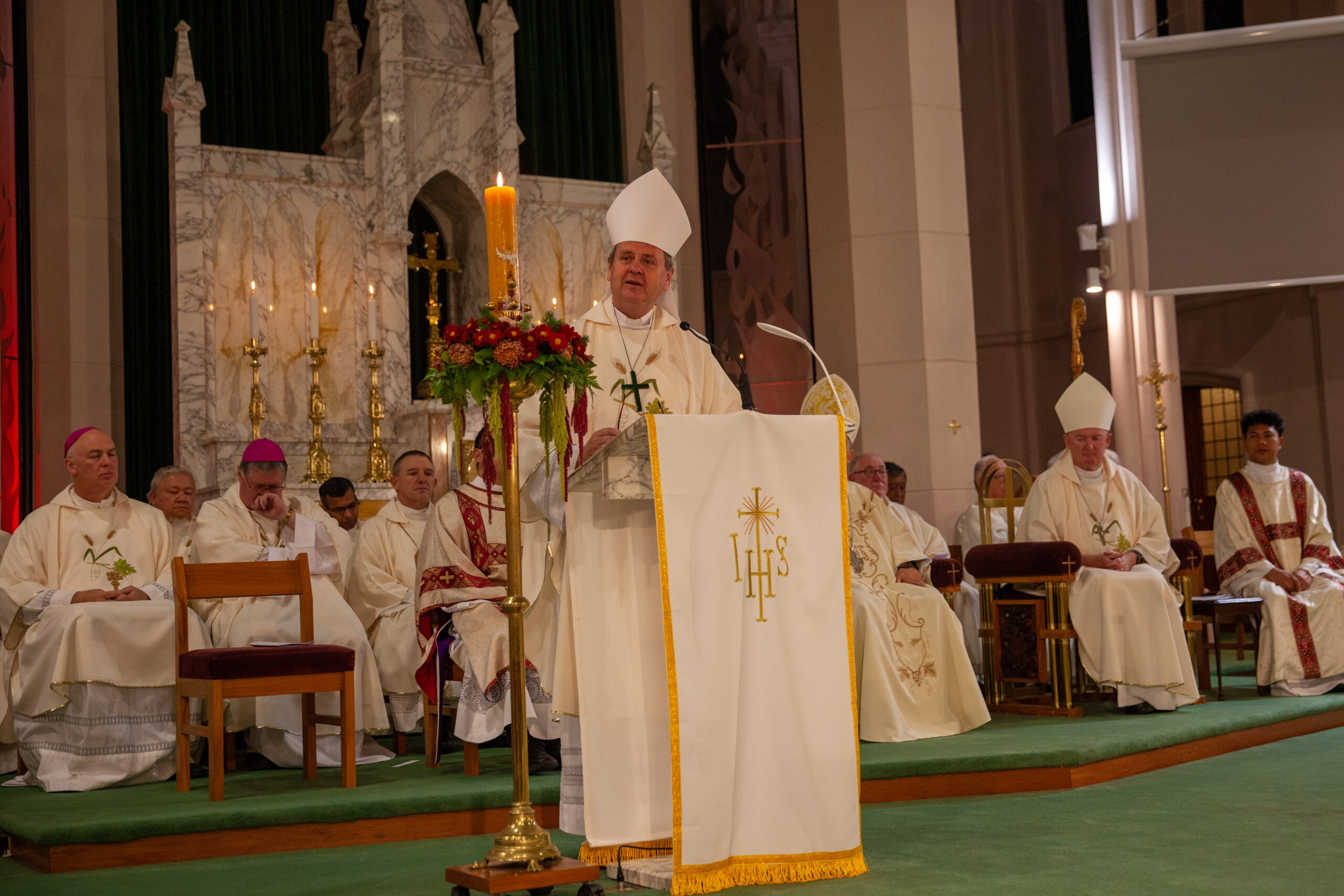
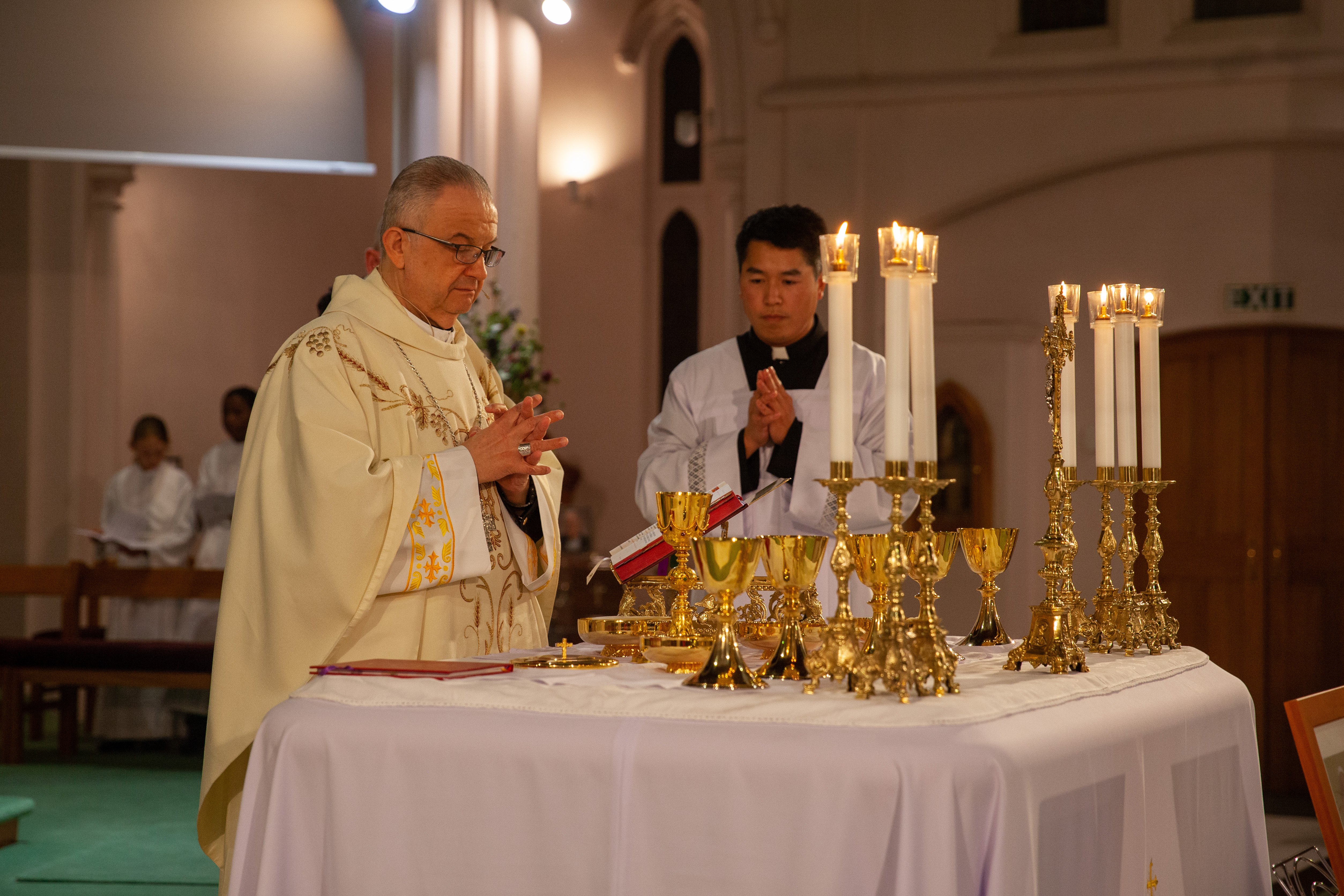
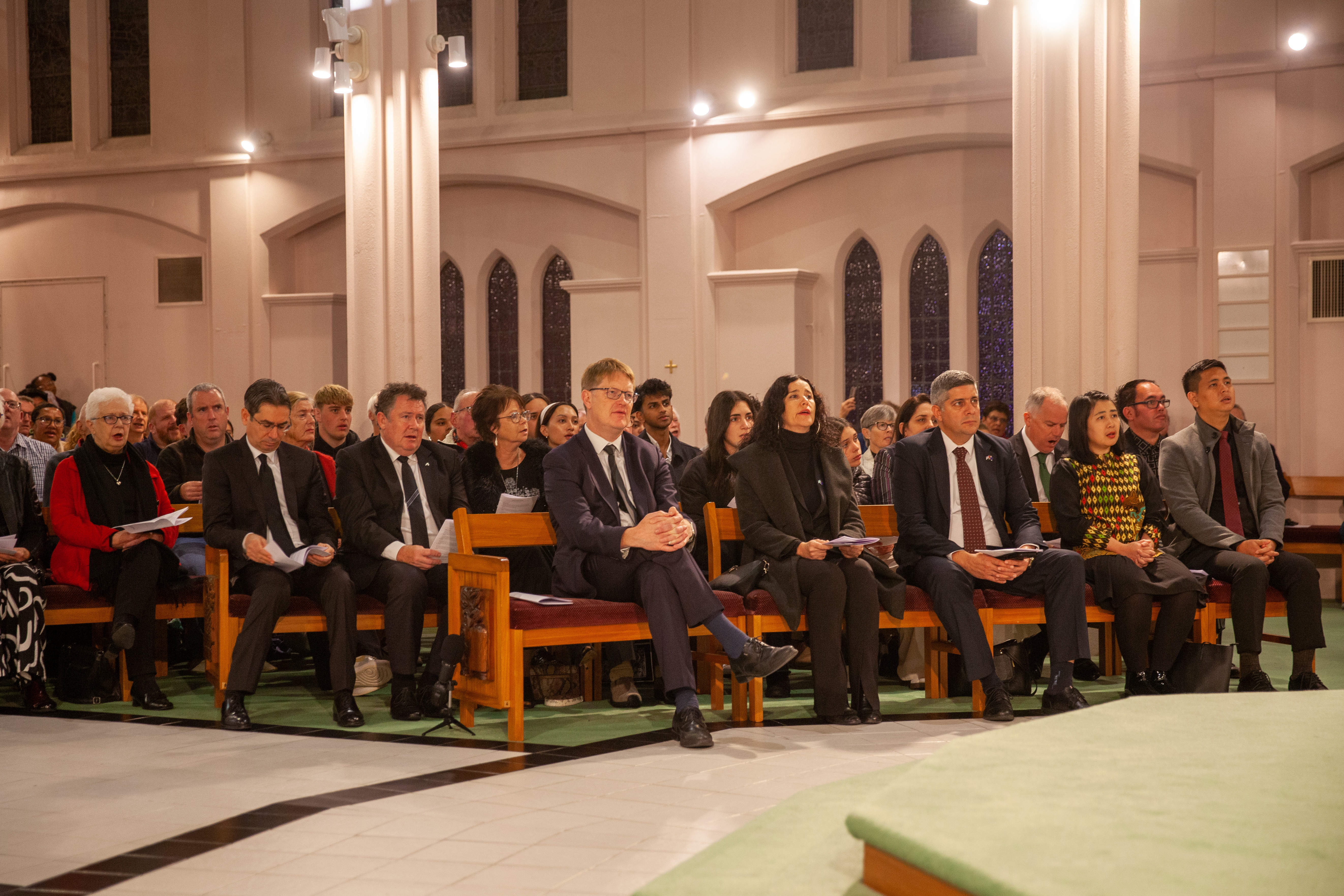
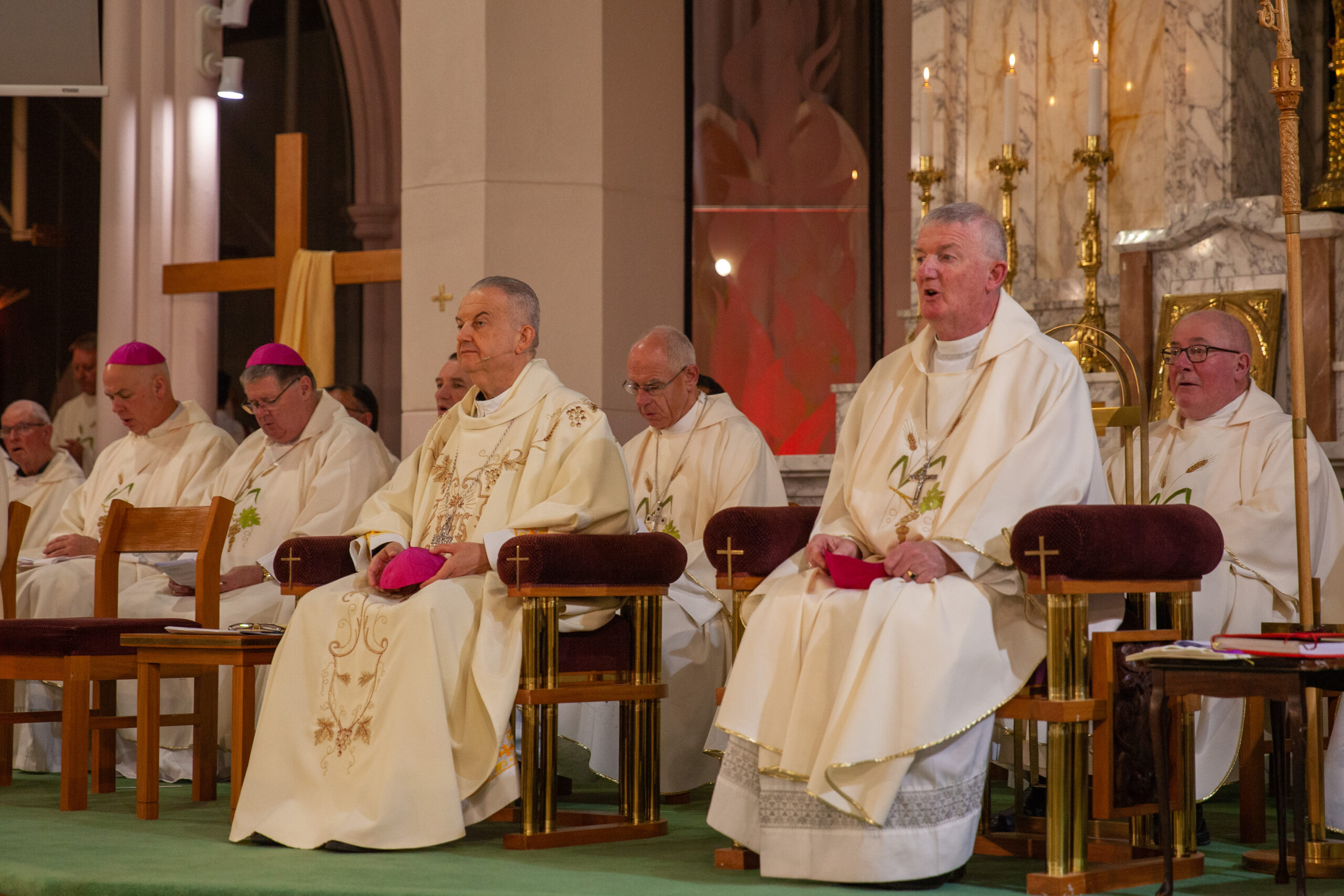
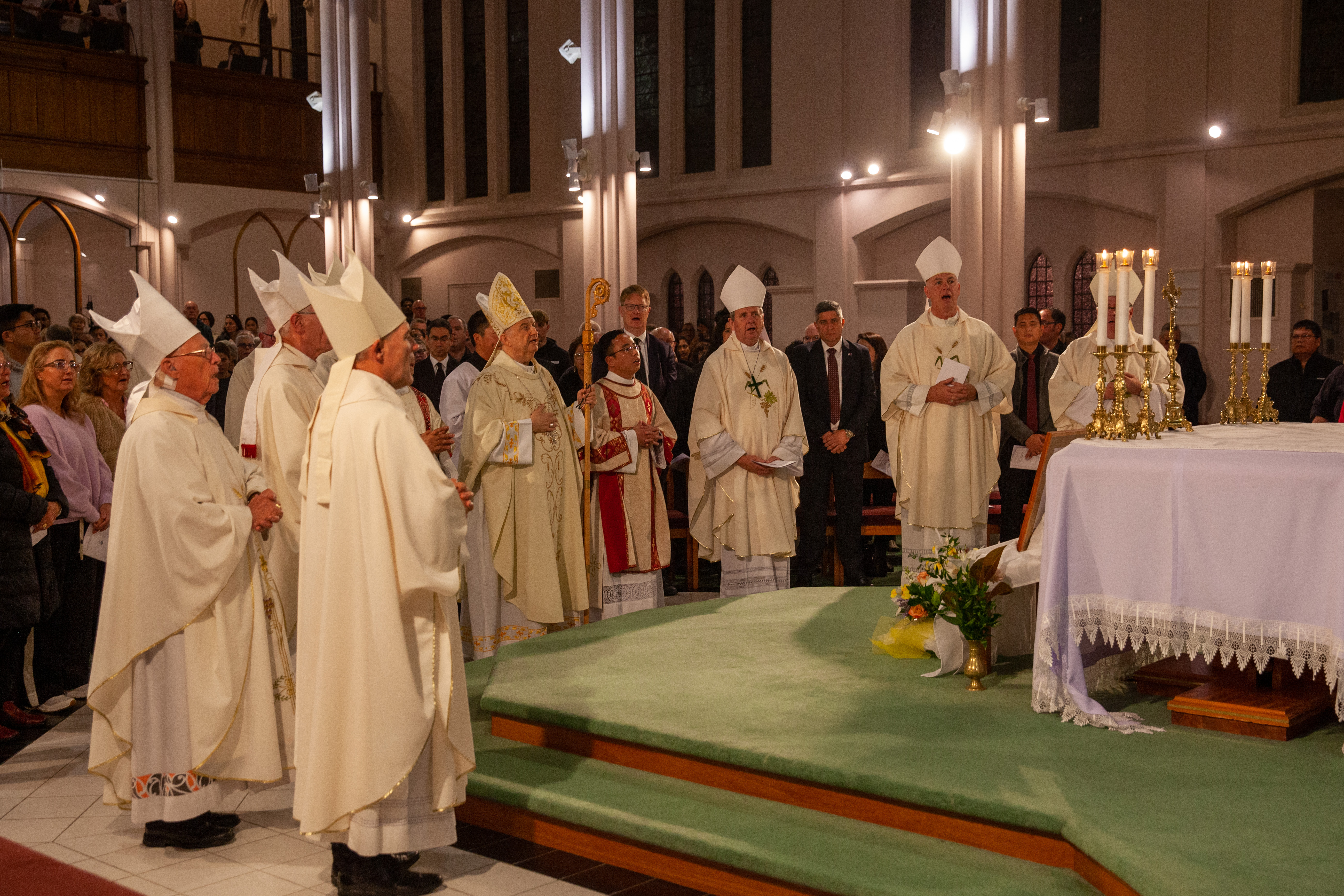
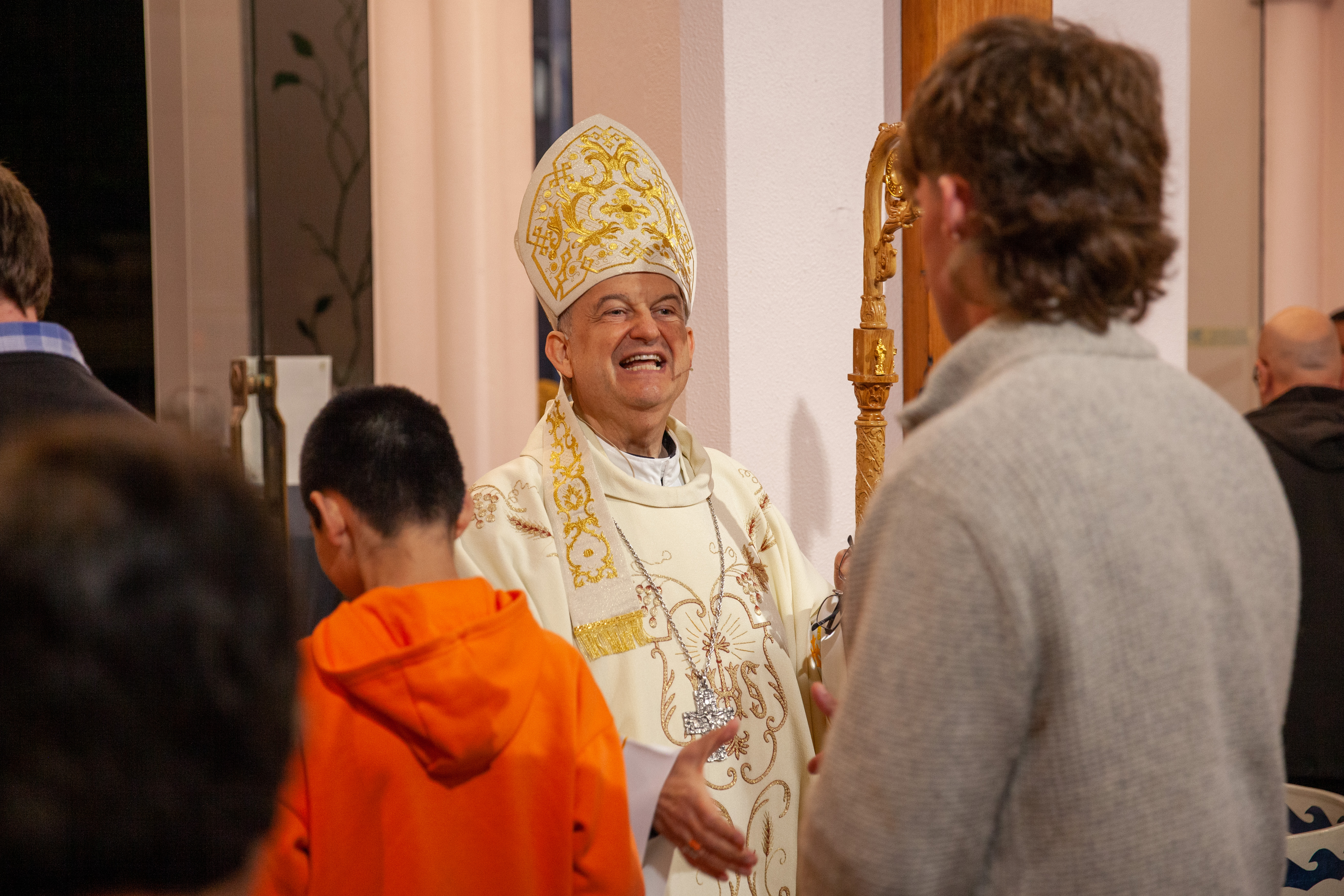
The Cathedral of the Holy Spirit in Palmerston North was priviledged to host the national memorial Mass for the late Pope Francis, held May 4 2025 and led by Archbishop Gábor Pintér, the Vatican’s ambassador to New Zealand. The packed service included bishops from all six New Zealand dioceses, diplomats, clergy, civic leaders, and interfaith representatives.
Archbishop Pintér emphasised Pope Francis’ legacy of mercy, calling it “God’s own style” and the central focus of his papacy. He praised Francis’ efforts to bring the Church closer to the marginalised and said his teachings remind us that mercy is the lens through which we come to know God. He also highlighted the Jubilee Year of Hope as a reflection of the pope’s belief in the resurrection as the foundation of Christian hope.
Bishop Stephen Lowe described Francis as a humble and compassionate leader who urged the Church to see God in those on the edges of society. He said the pope taught that mercy is greater than morality and cannot be reduced to formulas. “The messes we find ourselves in are the starting point for our journey with Christ,” he said.
Mayor Grant Smith said it was an honour for Palmerston North to host the memorial for a pope loved not just by Catholics, but by many.
Read the full article on our website.
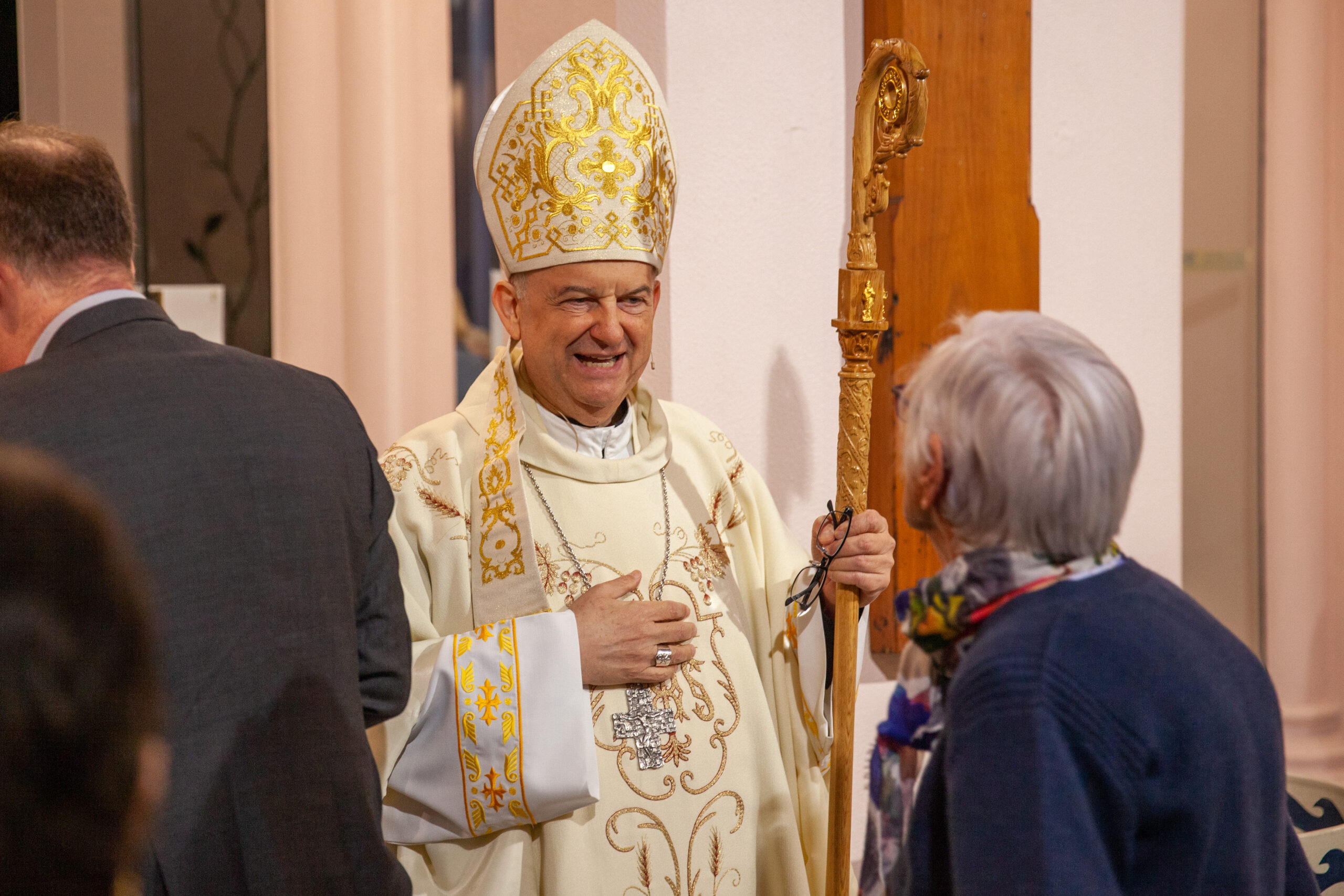
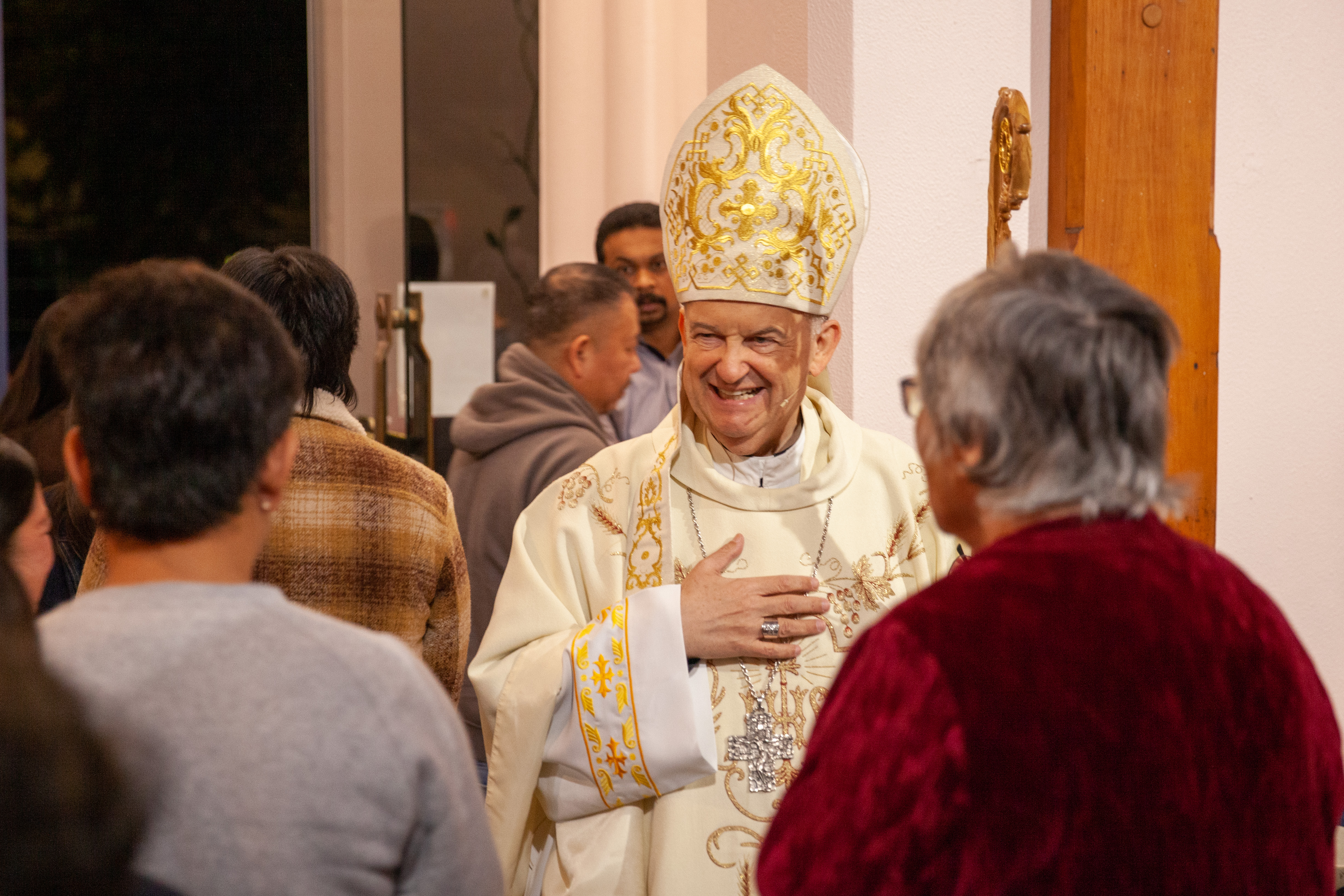
Bishop Adams Welcomes Pope Leo XIV as a “Missionary Pope” with a Heart for Justice
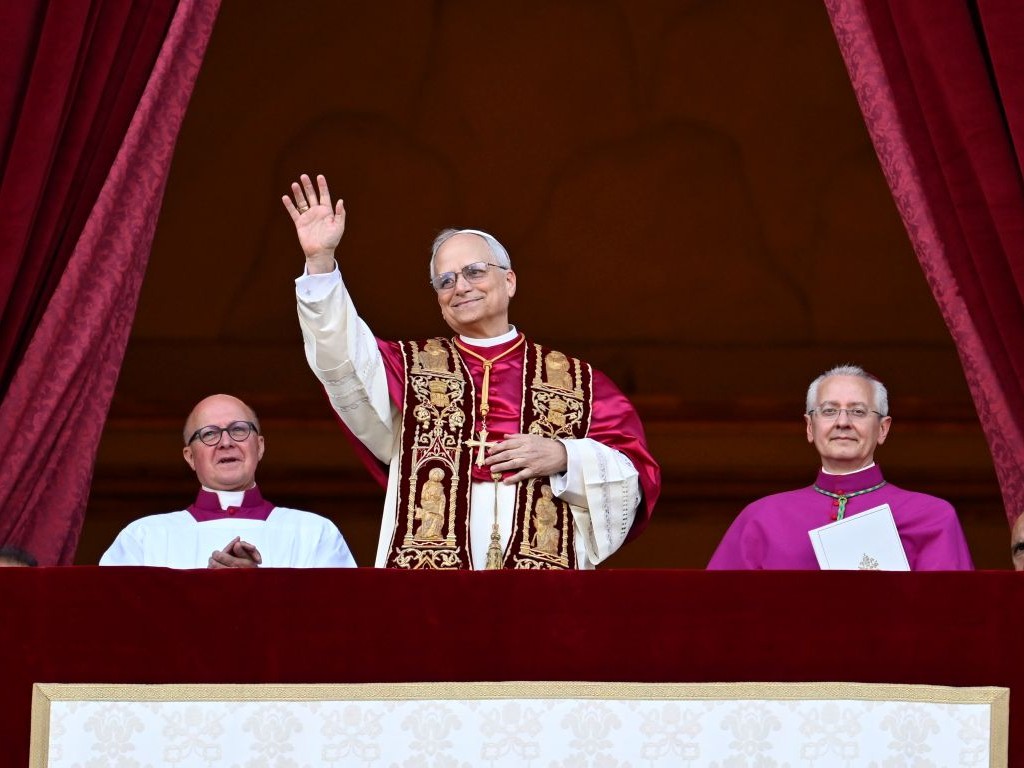 Bishop John Adams of Palmerston North warmly welcomed the election of Pope Leo XIV, praising his “missionary heart” and expressing hope that his leadership will re-energise the Church’s commitment to faith, service, and social justice.
Pope Leo XIV, formerly Cardinal Robert Francis Prevost, was elected on May 8, 2025, following the death of Pope Francis. A 69-year-old American and former missionary bishop in Peru, he is the first Pope from the United States. His experience among the poor and marginalised resonated deeply with Bishop Adams, who drew parallels with his own diocese’s pastoral priorities.
“Our upcoming Hope and Renewal Summit is all about rediscovering who we are by giving ourselves away,” the bishop said. “That’s exactly what we see in the life of Leo XIV.”
Reflecting on the Pope’s name, Bishop Adams noted the historic significance of Rerum Novarum, the foundational encyclical on social justice issued by Pope Leo XIII. He suggested the choice of name may indicate a renewed emphasis on the Church’s social mission.
In his first public address, Pope Leo XIV called for unity, peace, and outreach to the suffering, urging the Church to “build bridges with dialogue and encounter.” Bishop Adams said the new pontiff inherits a Church facing difficult challenges but affirmed that the Pope’s primary role remains unchanged: “to proclaim the Risen Christ, and to walk in faith, humility, and mission.”
Read the full article on our website.