Dr Robyn Andrews, a Research Fellow at Massey University and a parishioner at St Mary’s in Palmerston North, brings a unique perspective to her research on contemporary parish life in Aotearoa New Zealand.
She will also be publishing a series of more detailed pieces in Tui Motu.
Longstanding parishioners: experiences and views of the ‘Fourth Church’
This report focusses on interviews with longstanding parishioners who have experienced noticeable changes in their parishes over the last two decades, coinciding with the latest wave of Catholic migrants who are mainly Asian. As featured in the last two reports, those migrant groups in the diocese I carried out research in are mainly Filipino and Indian. This latest wave is establishing Aotearoa’s primarily Asian ‘Fourth Church’, to draw on Rev Dr Joe Grayland’s terminology. Of this church Grayland says:
The advent of the Fourth Church is changing the contemporary face of Catholicism. In some places this is quite rapid. (Grayland, 2021)[1]
This ‘church’ exists alongside other, previously established churches: the ‘Settler’ (mainly Irish, ‘Second Church’) and the ‘Pasifika’ (the ‘Third Church’). The ‘First Church’, or Missionary Church, was established by Bishop Pompallier after his arrival in Aotearoa in1838 (Grayland, 2021). The latest wave of Catholic migrants began soon after the belated and still growing practice of using the country’s indigenous language and cultural symbols in areas of the church and her liturgies and devotions.
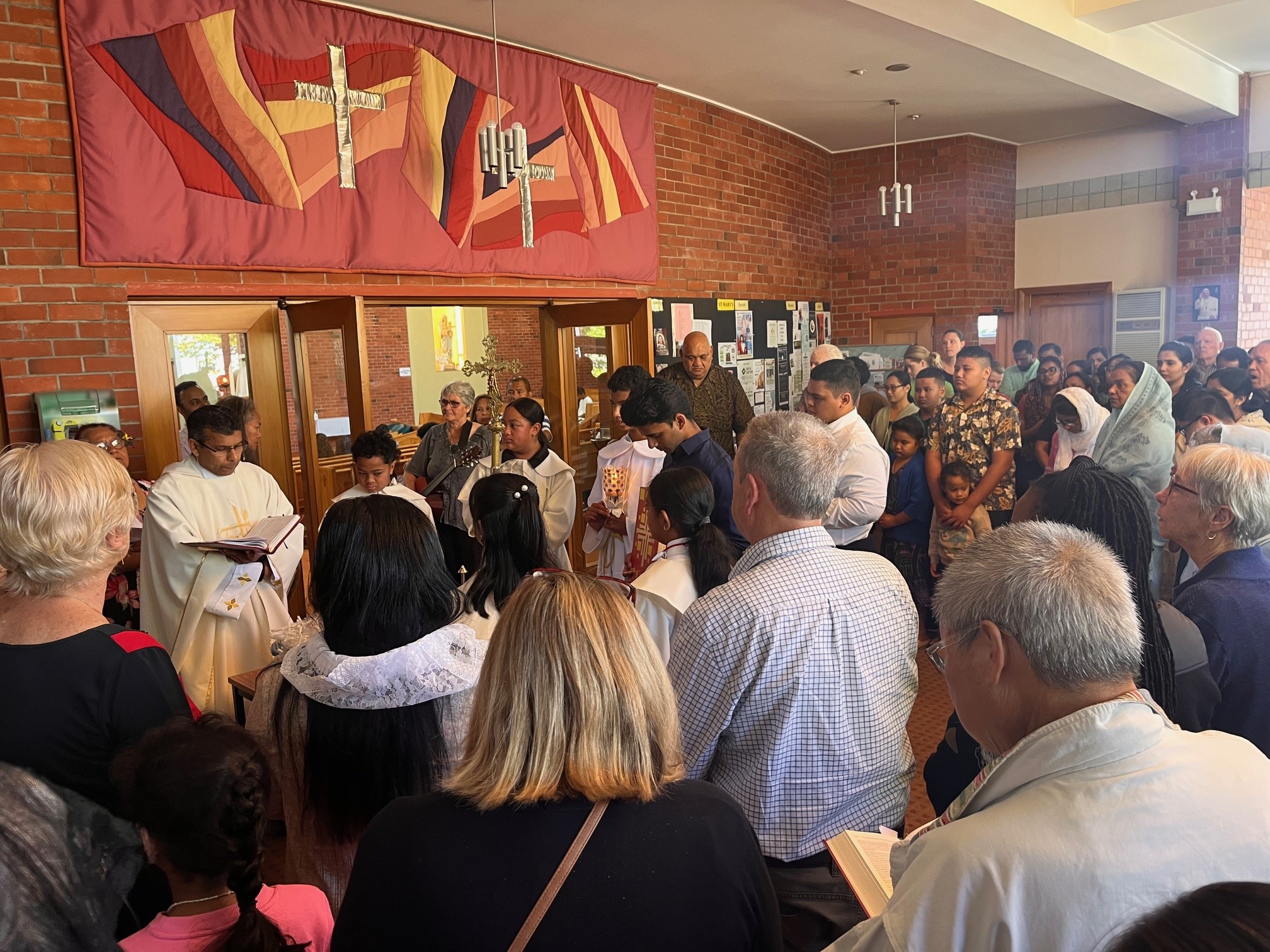
I invited longstanding parishioners: Māori, Pākehā, Pasifika, and others, to talk with me about changes they’ve observed and experienced, and how it has impacted them. The most significant and obvious changes they commented on are that parishioner demographics are different to what they were, and that the churches are full. About the demographics, one woman of over thirty years in the same parish said:
Well, the greatest proportion of people who attend the mass are Indian, with a good number of Filipinos and Pacific Island, Tongan people. And the Pakeha population is quite minimal. Yeah, we are still there though…
Other changes that parishioners commented on related to the look and feel, and practices. Research interviewees spoke of:
- Statues of the Virgin Mary are often elaborately adorned, especially but not exclusively, during feasts focusing on Our Lady.
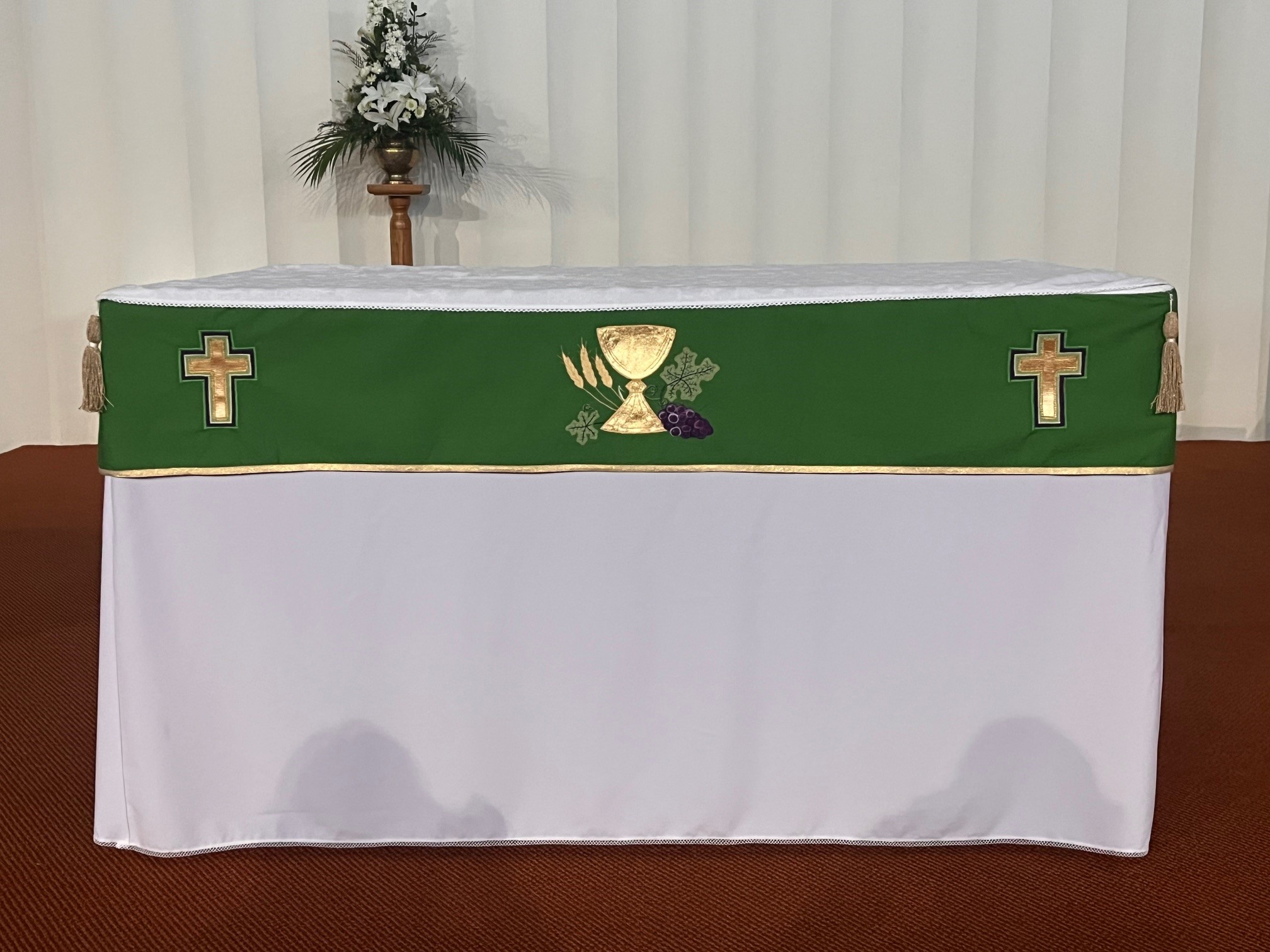
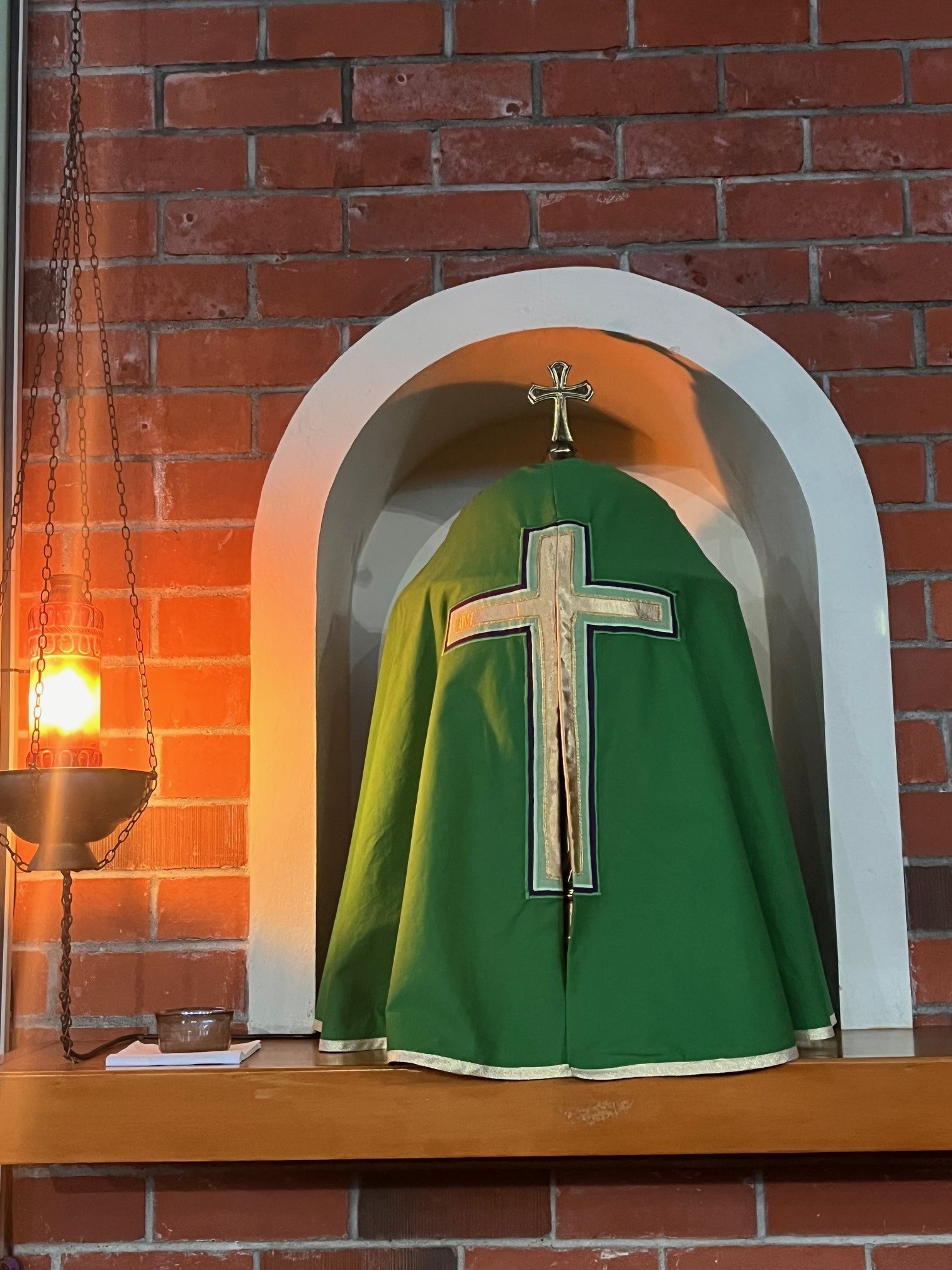
- The “beautiful native timber altars” and “gleaming polished tabernacles” are now covered with liturgical clothes.
- Artificial flowers, and other types of adornment, are used more than in the past, replacing fresh flowers.
- Incense is regularly used during masses, and not only for ‘special’ masses. One person commented that “the use of incense is quite a dramatic change.”
- More diversity in liturgical elements was commented on, for example, “with Filipino and Tongan choirs added into the music roster, and songs in the languages of church members”.
- Migrant Priests from Asian countries were not always easy to hear clearly or understand, particularly when delivering homilies.
- New hand gestures are used during masses, for example, opened hands facing upwards when reciting the Lord’s Prayer. The new parishioners may have introduced these, but many longstanding parishioners have freely adopted this gesture too.
- Other changes in body praxis were noted too, such as kneeling during the Eucharistic prayers when previous Bishops had advocated for, and educated, parishioners to stand throughout.
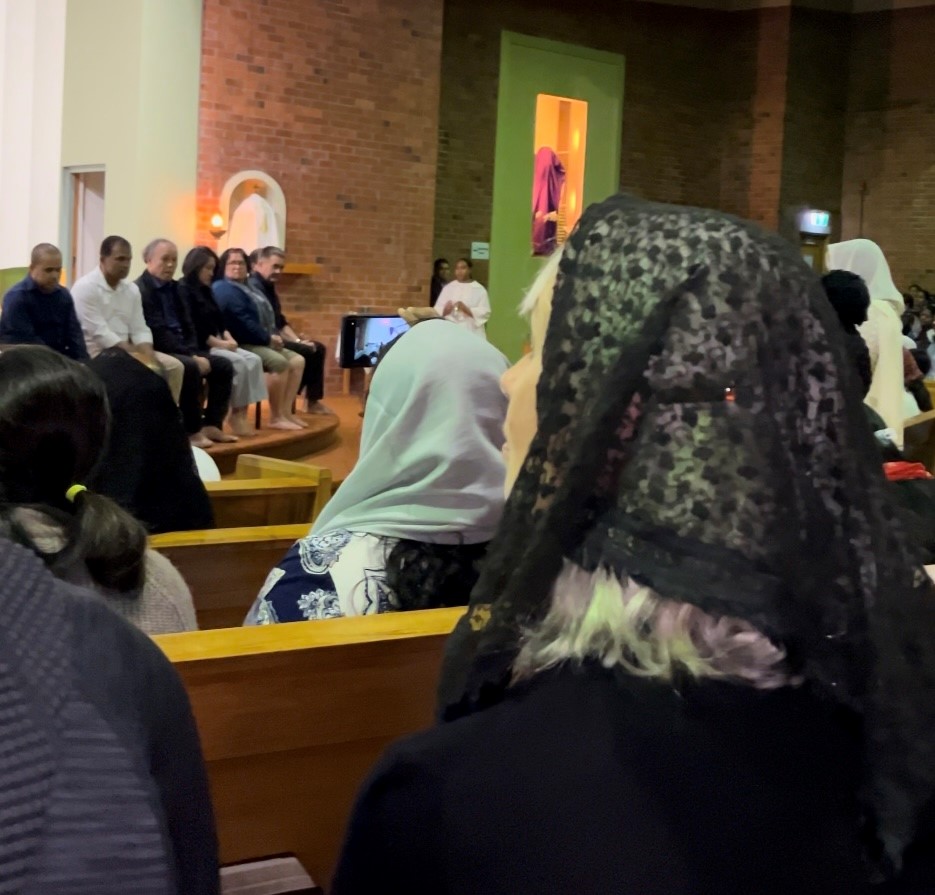
- More recently there are new ‘conservative’ or ‘traditional’ practices being re-introduced by some mass participants, perhaps via migrant groups where it is their cultural norm, but also by more recently arrived conservative Pākehā parishioners. This is particularly evidenced by the wearing of head scarfs or veils by women and taking the Eucharistic host on the tongue rather than in one’s hands. While such ‘signs’ as wearing veils may not be indications of traditionalism or conservativism, it seems likely, and this is how it was reported by those I spoke with.
It is in the area of changes that there can be tensions and challenges for the way ahead. Not surprisingly, I heard a range of reactions to the various changes, with some finding difficulty in adjusting, and others not averse to most changes.
A change that was greeted positively by all, was that newer parishioners are becoming more engaged in parish ministries and other duties. Some added that parish committee roles, however, are still predominantly held by longstanding parishioners.
Overall, I did get a sense of positivity about the new, more energetic and ‘alive’ church life. The reason for one person’s enthusiasm was this:
I love the diversity. I really do. You know that sense of the universality of the church, I guess, is something that’s really highlighted. That everyone’s, they’re all making their way through life, and this is part of how they do that. I mean people’s theology would probably possibly be very different from my own, but I don’t let that bog me down.
Those I interviewed said they intended to stay in the parishes they “belonged to” for all there had been some changes that “took some getting used to”. I do need to add that the parishioners I interviewed were the ones who had remained in their parishes even though, in each of the three city parishes investigated, there were options to join another parish.
Conclusions:
Change has been a constant throughout the Catholic church’s history in Aotearoa: through immigration of Catholics and the establishment of the various ‘churches’; the introduction of new ways as a result of Vatican II; and the social changes brought about by globalisation, particularly through technology. In this research, with migration as the focus, it is clear that most longstanding parishioners are doing as Pope Leo XIV asks of us all, that is, to see migrants as sources of revitalisation of our churches.[2] A next step is the creation of opportunities for all parishioners to get to know each other better, and to convert the grace of change into the enhancement of parishes as united faith communities.