22 April 2026 was Earth Day, marking 56 years of global environmental action focusing on community-led climate solutions and renewable energy adoption. The 2026 theme centred on “Our Power, Our Planet,” emphasising citizen action, policy change, and holding institutions accountable.
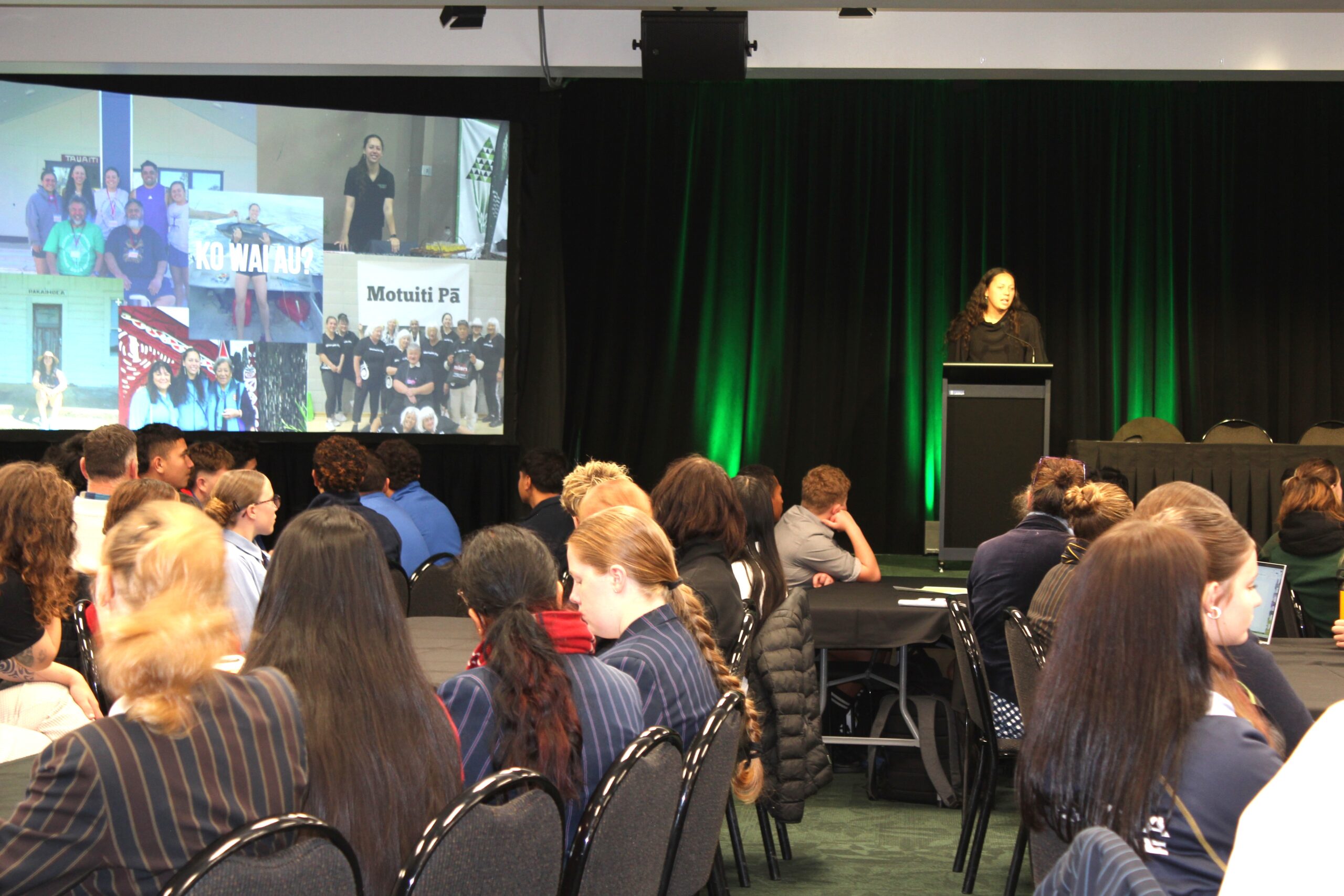
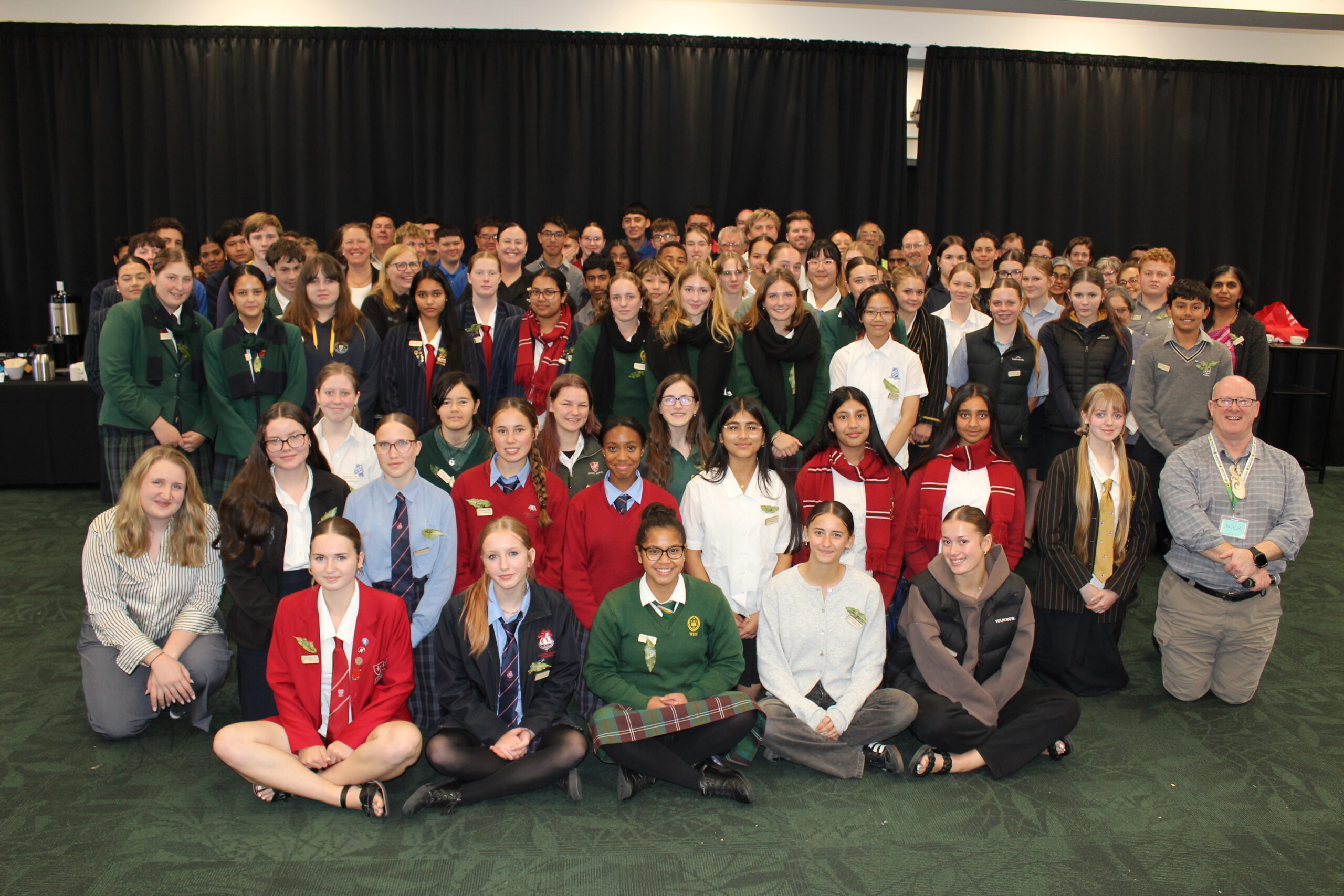
In Palmerston North, 65 students and their teachers from 15 schools celebrated Earth Day by holding a Climate Clarity Youth Forum at the Palmerston North Convention Centre. Students and staff from St Peter’s, Hato Paora, and Cullinane College attended. Nick Wilson, Pastoral Services Director for the Diocese of Palmerston North, was MC, along with youth leaders Sajani Dissanayake, Palmerston North Girls’ High School Head Girl 2026, and Poppy Jeffrey from Nga Tawa Diocesan School.
Building on last year’s successful Youth Forum held on International Youth Day, 12 August, this year’s Youth Forum distinguished itself by being student-led, with prominent youth climate action speakers and a student panel. This year, as last, the forum aimed to give students greater clarity about the science of climate change, the many ways young adults can mitigate further damage to the environment, and to harness the resourceful energies of young people to create communities of resilience that inspire collective action and hope.
Students Sajani Dissanayake and Poppy Jeffrey were key members of the committee. Sajani serves as youth representative on the Environment Network Manawatū Board, and Poppy was selected this year for the New Zealand Biology Olympiad Camp in Otago.
Following a warm welcome by Deputy Mayor Debi-Marshall Lobb, Kararaina Te Puni (Ngāti Raukawa ki te Tonga, Rangitāne o Manawatū, Ngāti Porou, Ngāi te Rangi) shared her research on the ability of Indigenous forests to sequester carbon. Her study is part of the CarbonWatch NZ project, and Kararaina, in her early twenties, is the first Māori scientist in this field.
Internationally recognised youth engagement practitioner Lola Fisher, from Auckland, shared her journey as an advocate for the rights of young people to be heard and taken seriously, especially when it comes to climate justice, because their very future is at stake. Stressing the power of relationships in effective movements for social change, Lola challenged students to get involved in environmental programmes dealing with sustainable development in their schools and communities, as well as in local and national government. “The future is yours,” she said, “so steer it.”
A high-powered youth panel followed, comprised of Horowhenua College Envirogroup leader Ashlee West, appearing in person, and Eve Hill and Isabella Ives, presenting online from the University of Canterbury. Both Eve and Isabella were Palmerston North Girls’ High alumni.
Ashlee West, Envirogroup leader from Horowhenua College, talked about the importance of Green Week and becoming an Enviroschool.
Eve Hill, PNGHS Sustainability Prefect 2024, shared a presentation on her sustainability journey at PNGHS and her actions to get solar panels installed at the school. Eve recently gained a silver medal at the NZ University Rowing Championships and is involved in a range of initiatives at the University of Canterbury.
Isabella Ives has continued her sustainability journey at the University of Canterbury by setting up a programme called UC Girls Outdoors to encourage young women to engage in outdoor sport. This year alone, over 400 young women have taken up the challenge. While at PNGHS, Bella established the Upcycling programme and was on the Greasy Chain Board. The goal of the programme was to increase the number of young women biking through a series of workshops and activities that increased their knowledge of safe cycling and bicycle maintenance.
At the end of the day, Mary Eastham from the Religious Diversity Centre Climate Action Group and the Diocesan Commission for Justice, Peace, Ecology and Development gave each school and the guest speakers the newly launched climate action resource, “E tū te mana o te ao: Building a Climate of Hope – Faith and Action Guide”. This first interfaith climate action guide articulates the triple As of climate crisis engagement: Awareness, which leads to Advocacy, which leads to Action. It approaches these from the perspective of faith, which puts love at the centre of care for creation and other people. This message complemented the Youth Forum’s focus on clarity about the science of climate change, and the myriad ways young people could lower their carbon footprint and create communities of resilience for those suffering from the negative impacts of climate disruption.
Judging from evaluations received from students and teachers, this second Climate Clarity Youth Forum was even more successful than the last. Wrote one student: “The best part was having living examples of the changes young people can make and being shown what support systems are out there.” One teacher commented: “It was great that students could come together to build connections with other schools and students.”
Photos: Julie Randall