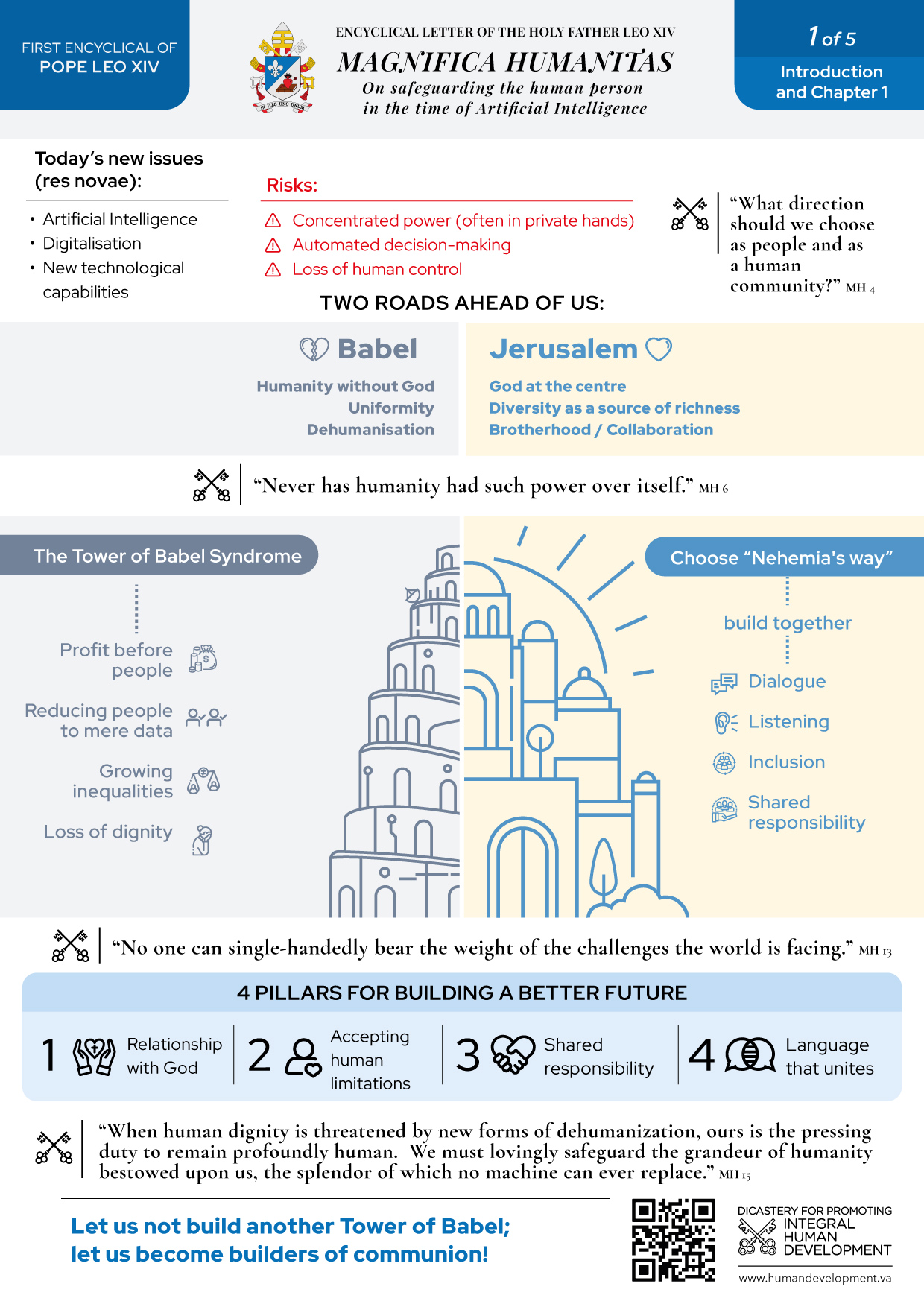
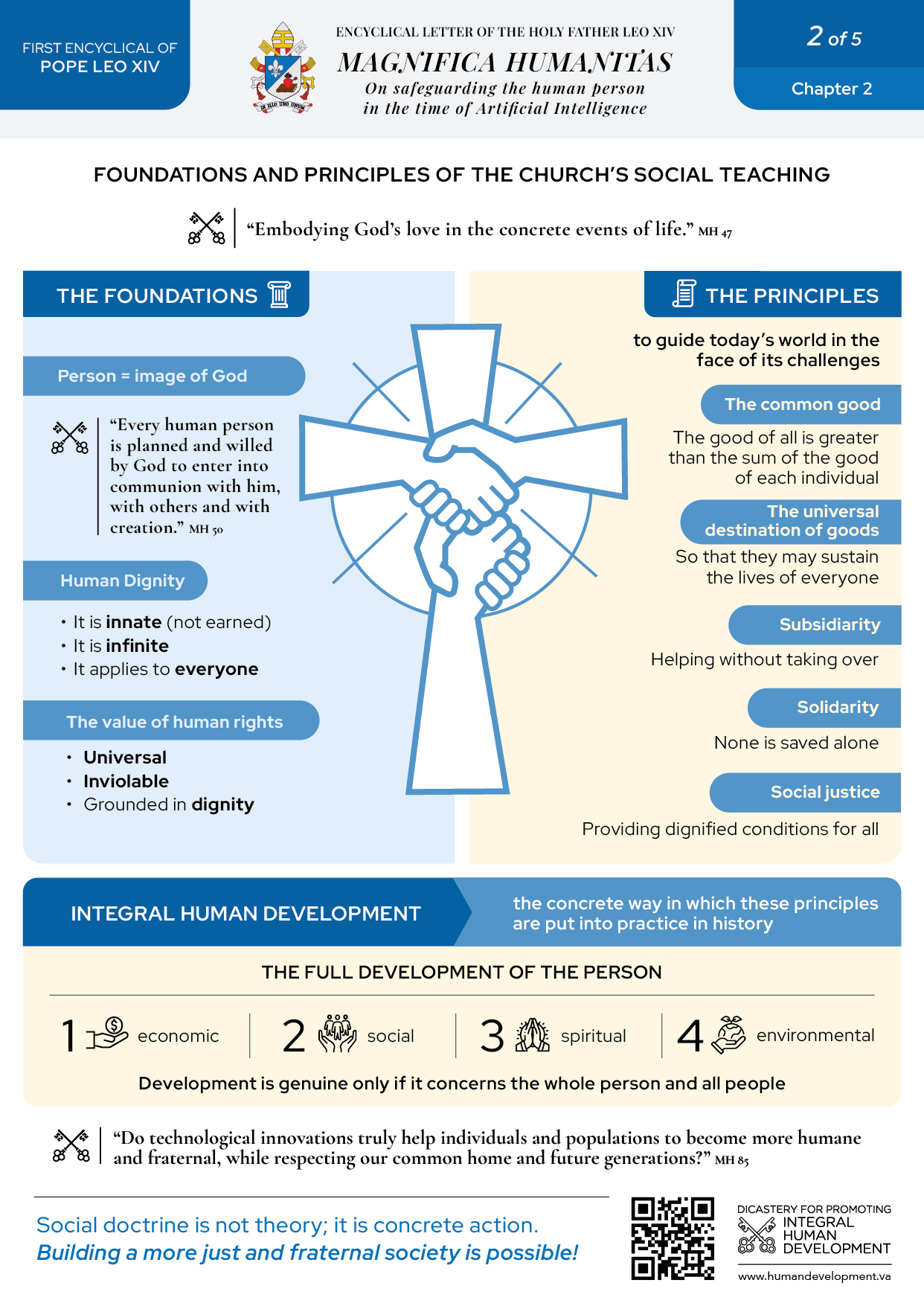
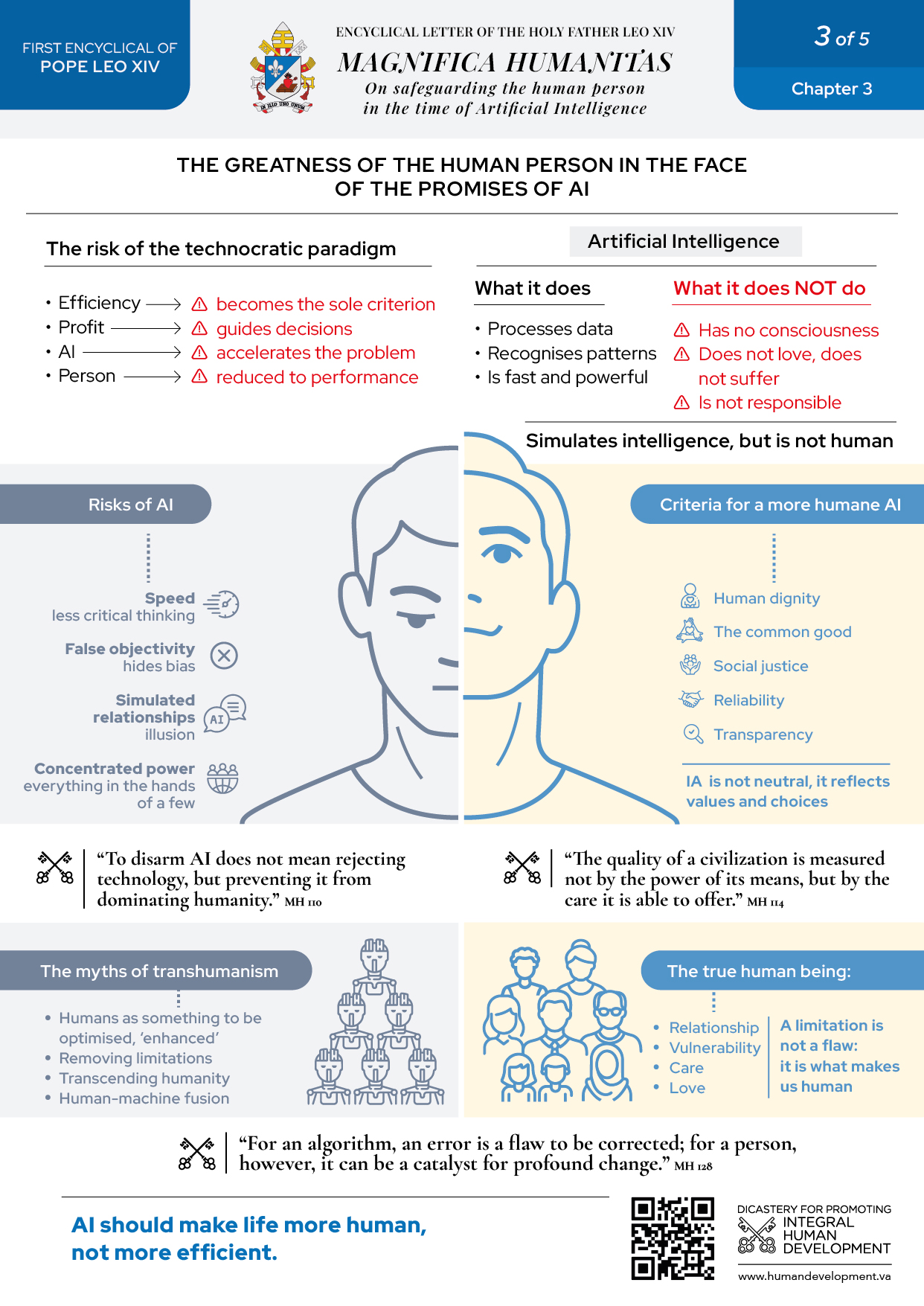
In his first encyclical, Magnifica humanitas, released on May 25, Pope Leo XIV reflects on how artificial intelligence is reshaping human life and insists that technology must remain at the service of the human person, never the other way around.
Signed on May 15, the 135th anniversary of Rerum novarum, the document places today’s digital revolution within the Church’s long tradition of social teaching. Pope Leo argues that AI is not simply a technical tool or a neutral force: it reflects the values of those who design, finance and control it. For that reason, he says, the central question is not only what technology can do, but what kind of society it is helping to build.
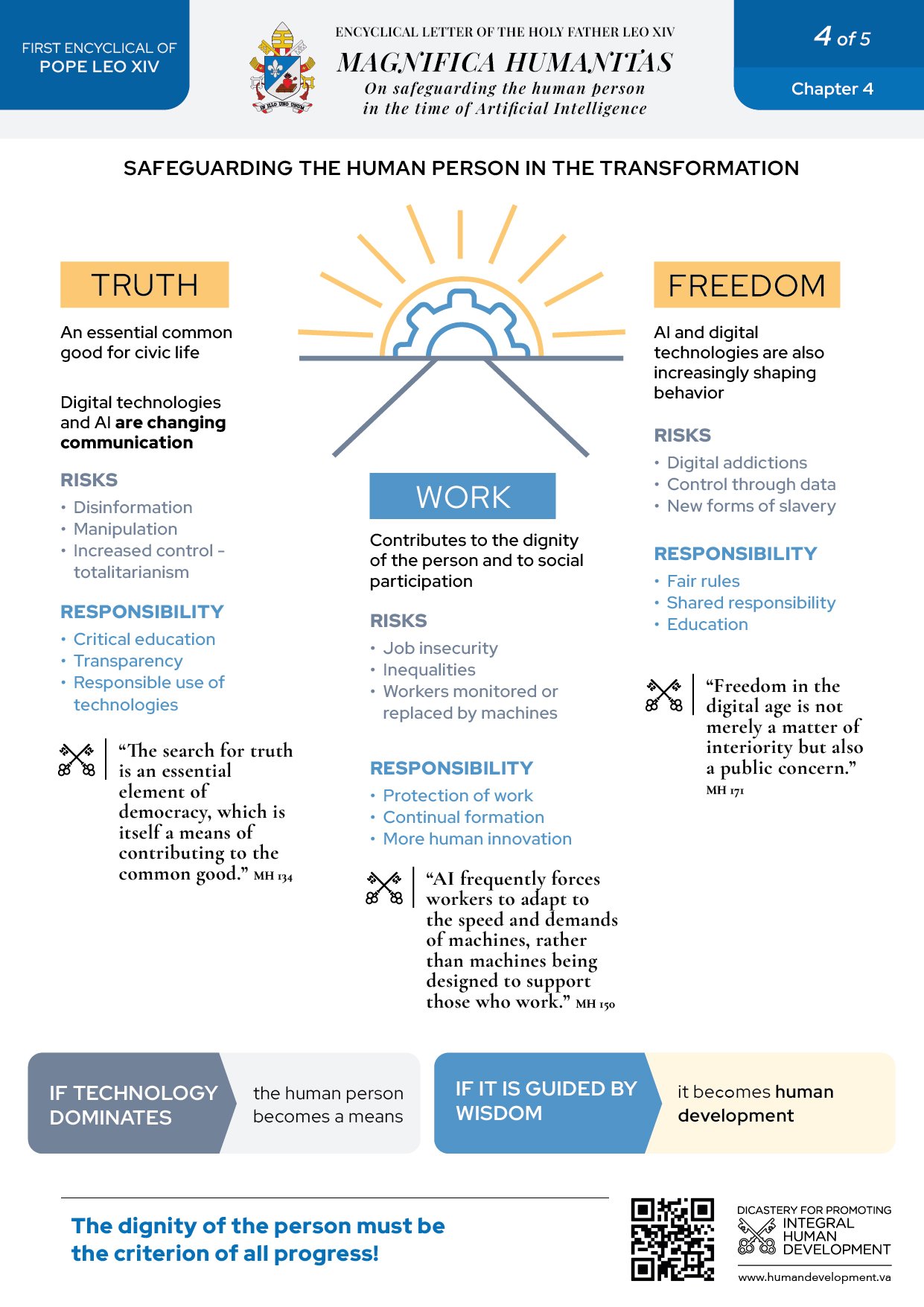
Several themes stand out in the encyclical. Pope Leo returns repeatedly to human dignity, warning that people must never be reduced to data, productivity or market value. He stresses that truth matters in a digital culture shaped by misinformation and manipulation, and he calls for an “ecology of communication” marked by honesty, transparency and critical thinking. He also highlights the dignity of work, saying technology should support workers rather than force human beings to adapt to the logic of machines.
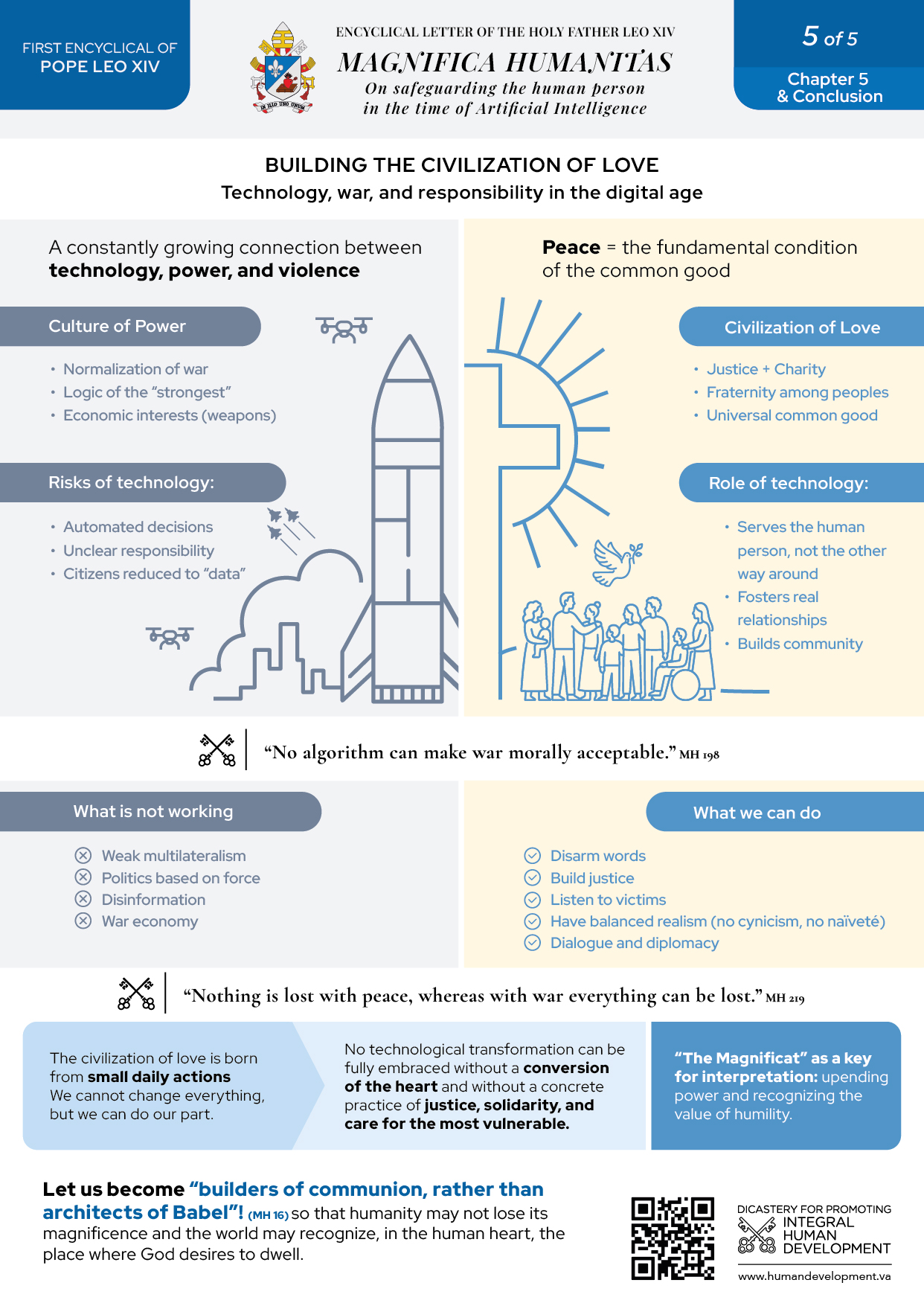
Alongside this is a strong concern for freedom and justice: the Pope warns against surveillance, social control, exclusion from the digital world and the concentration of technological power in the hands of a few. Finally, he links AI to the question of peace, arguing that no algorithm can make war morally acceptable and that technology must not further normalise violence.
New Zealand voices have welcomed that challenge. Julianne Hickey, an advisor to the Archdiocese of Wellington who participated in a major AI conference at the Pontifical Gregorian University in Rome last year, said Pope Leo had earlier asked people to consider “who we are becoming through the technologies we build,” and said the encyclical challenges those working in AI “to be intentional now, so that future generations flourish.”
James Bergin, who has worked as a technology leader for more than two decades and has advised the Church in a range of digital ministries, said the Church has helped lead ethical conversations about AI and that Pope Leo “carefully exposes the duality of current technology and urges us to avoid simply sleepwalking into the future.”
Together, their comments underline the encyclical’s central message: humanity’s future must be shaped not just by innovation, but by wisdom, justice and moral courage.
Source: Vatican News and New Zealand Catholic Bishops Conference
The English editorial team of Vatican Radio – Vatican News has prepared an audiobook of Magnifica Humanitas, divided into seven audio files.
The Vatican Dicastery for Promoting Integral Human Development has produced some helpful infographics outlining the key points of Magnifica Humanitas: