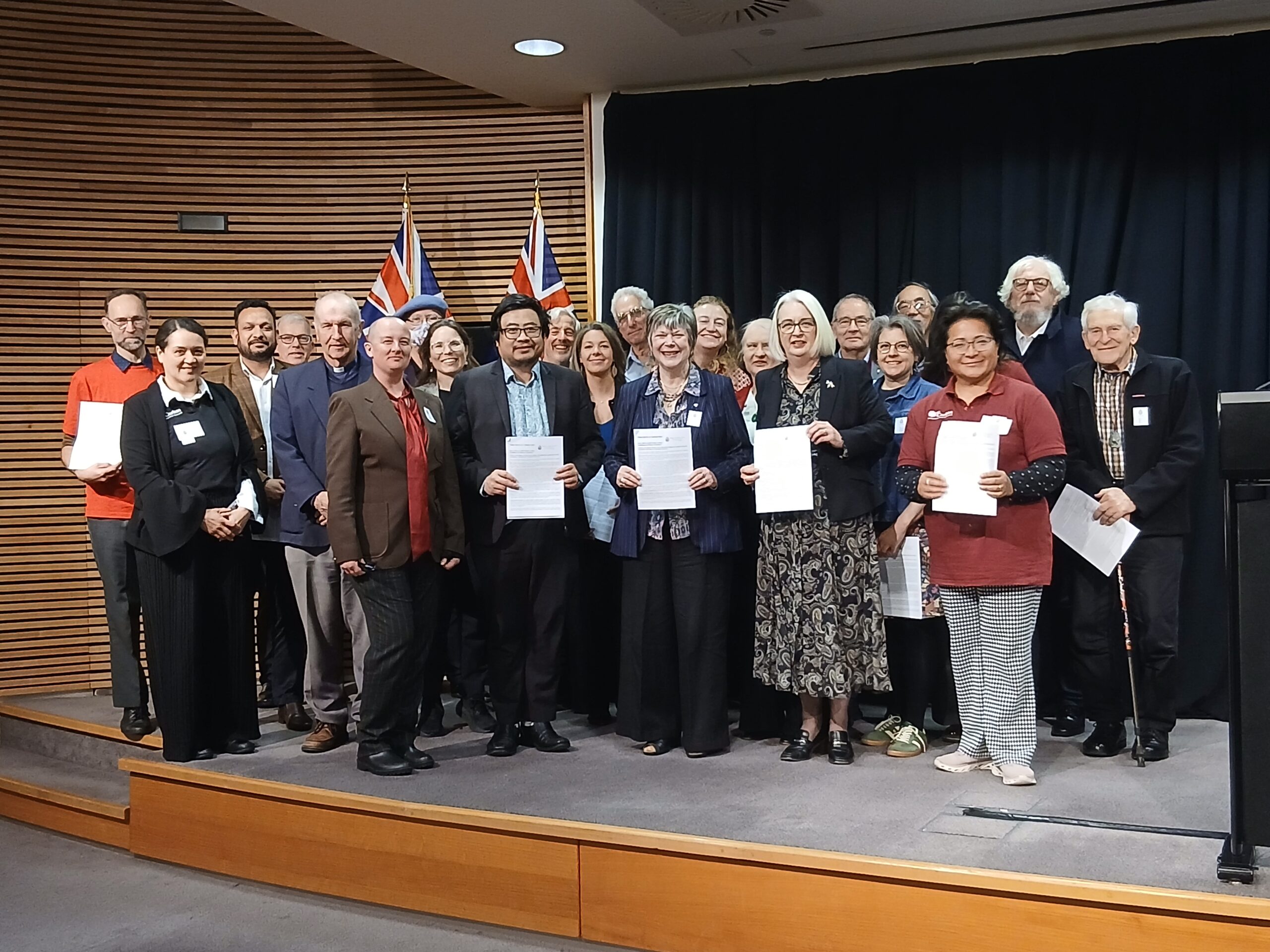
On Tuesday, 15 September, the Climate Action Group of the Religious Diversity Centre Aotearoa New Zealand issued an Open Letter to all political candidates, parties, and parliamentarians, urging urgent climate action for our country (https://rdc.org.nz/climate-action-open-letter/). The Open Letter was endorsed by 158 diverse faith leaders, communities, organisations and individuals. Many Catholics endorsed the Open Letter including the Palmerston North Diocesan Commission for Justice, Peace, Development and Ecology. Emeritus Bishop Peter Cullinane was the first to endorse it. Ttitled Care for Our Common Home, the letter emphasises the moral, environmental, and socio-economic imperatives of addressing climate change, as a critical issue for New Zealand’s future and global responsibilities.
A unique dimension of the letter is its positive focus. It frames climate action as a huge opportunity to enhance New Zealand’s economic and social resilience, with many co-benefits. Adaptation policies can lower long-term economic costs, protect infrastructure, and improve food and water security. But adaptation measures can’t be sustainable if emissions keep rising, so mitigation must receive at least equal attention.
This letter follows a book published last year (https://rdc.org.nz/rdc-climate-action-group). Whereas E tū te mana o Te Ao: Building a Climate of Hope stressed the educational/ Awareness and activist/ Action dimension of faith-based climate action, the Open Letter is about Advocacy for environmental wellbeing upon which human beings depend.
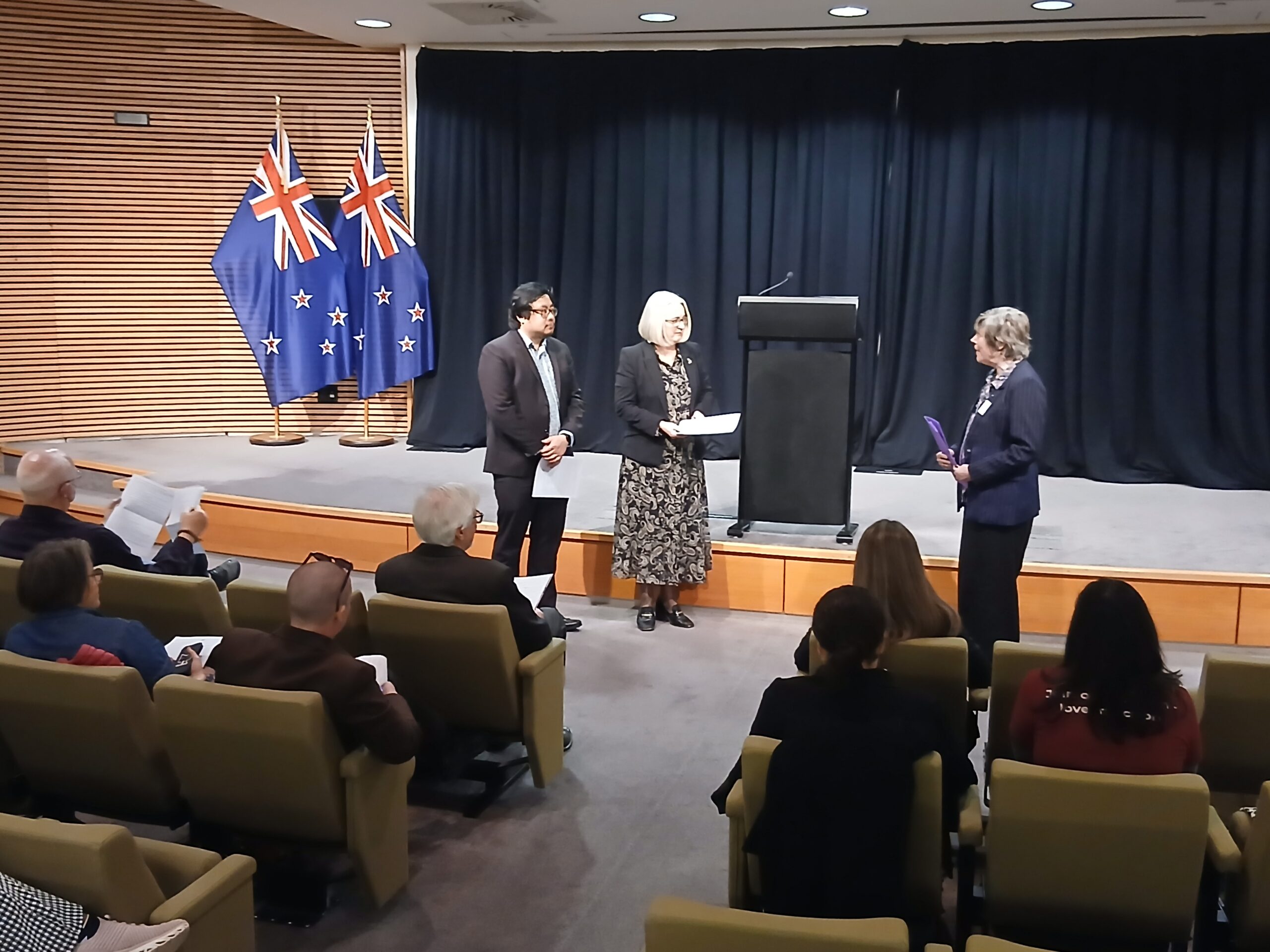
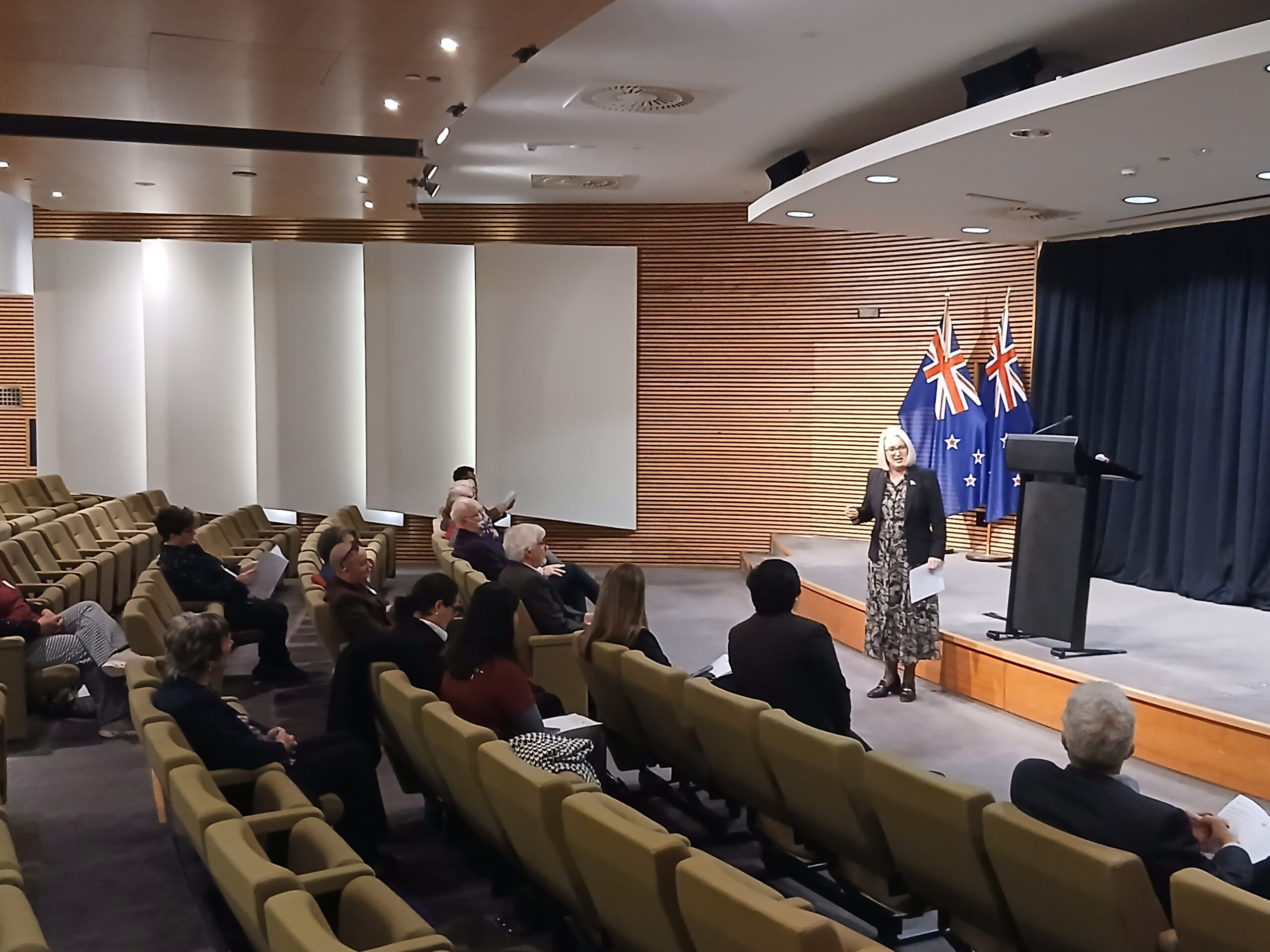
That same day, a formal presentation of the Open Letter also took place at the Theatrette in Parliament. Sponsored by the Hon. Dr. Deborah Russell, Labour spokesperson for Climate Change, who graciously invited Greens Associate Climate Spokesperson, Francisco Hernandez to accept the Open Letter with her, the event attracted some thirty people, from New Plymouth, Palmerston North and the religious, social service and political community in Wellington. Many members of the Wellington Interfaith Council were present. Five Members of CARITAS AOTEAROA New Zealand were present, including CEO Mena Antonio. CARITAS advocates for climate justice across the Pacific and Southeast Asia.
Paul Blaschke, convenor of the RDC Climate Action Group, was MC, and Mary Eastham, as Trustee of the RDC, presented the Open Letter to Deborah Russell and Francisco Hernandez, who spoke afterwards about what the Open Letter meant to both of them as members of Parliament. They acknowledged the unique responsibility and role government had in prioritising environmental protection and sustainable development in policy discussions and decisions.
The interfaith dimension of the event was exquisite. Hindu interfaith leader, Manish Kaushik, chanted the opening prayer and connected our urgent call for climate action to the recent tragedy in Nepal because we are all part of a global community called to care when disaster strikes.
Mons. Gerard Burns, Vicar-General, Catholic Archdiocese of Wellington, underscored that the very title of the Open Letter — To Care for Our Common Home — highlights the moral truth that the Earth belongs to us all, because it is a gift from God, and thus the only appropriate response from a person of faith is to see the Earth as gift, and care for it accordingly. In a gesture of cultural respect, Mons. Burns predicated his remarks with a beautiful formal greeting in Te Reo Māori.
Paul Barber from St. Andrews on the Terrace Wellington, shared a special message from Rev. Fei Taule’ale’ausuma from Samoa, of our responsibility to our Pacific Island neighbours who are currently paying a very high price for a crisis they did nothing to create. Thus, the responsibility of all people of goodwill, people of faith as well as people who care, is to phase out fossil fuels and make a just transition to clean energy.
The word “transformation” was central to the message of Ronja Ievers from Soka Gakkai Buddhist Institute. For people to see themselves as connected to the earth and to one another, transformation in the way we think and see things is vital. Ronja pointed to the efforts of Buddhist peacemaker, Daisaku Ikeda:
Buddhist philosopher, peacemaker, and founder of Soka Gakkai International, Daisaku Ikeda called for many decades for efforts to realise peace and human security. In his annual peace proposals he submitted to the United Nations for 40 years, he strongly emphasised that because global crises are created by humans, our capacity to resolve them also lies within human beings themselves, particularly through a transformation in the way we think, act and relate to one another. Taking responsibility for transforming our own lives is the first step towards creating a society based on compassion and respect for the dignity of all life.
For the Climate Action Group, the Open Letter is both a moral and strategic call for such a transformation within the hearts and minds of New Zealand’s political leaders. If our political leaders could heed the call to prioritise climate action at this critical moment in the history of humanity, this achievement could be linked to other proud moments in New Zealand’s history of progressive global leadership — such as women’s suffrage and nuclear-free policies — to inspire collective action. Through equitable climate action, Aotearoa NZ can uphold its reputation as a clean, green nation while securing a sustainable future. The message is clear: visionary leadership for urgent action is essential.
Mary Eastham is a Religious Diversity Centre (RDC) Trustee, member of RDC Climate Action Group, and member of Diocesan Justice, Peace, Development and Ecology Commission.
Photos: Caritas Aotearoa New Zealand