
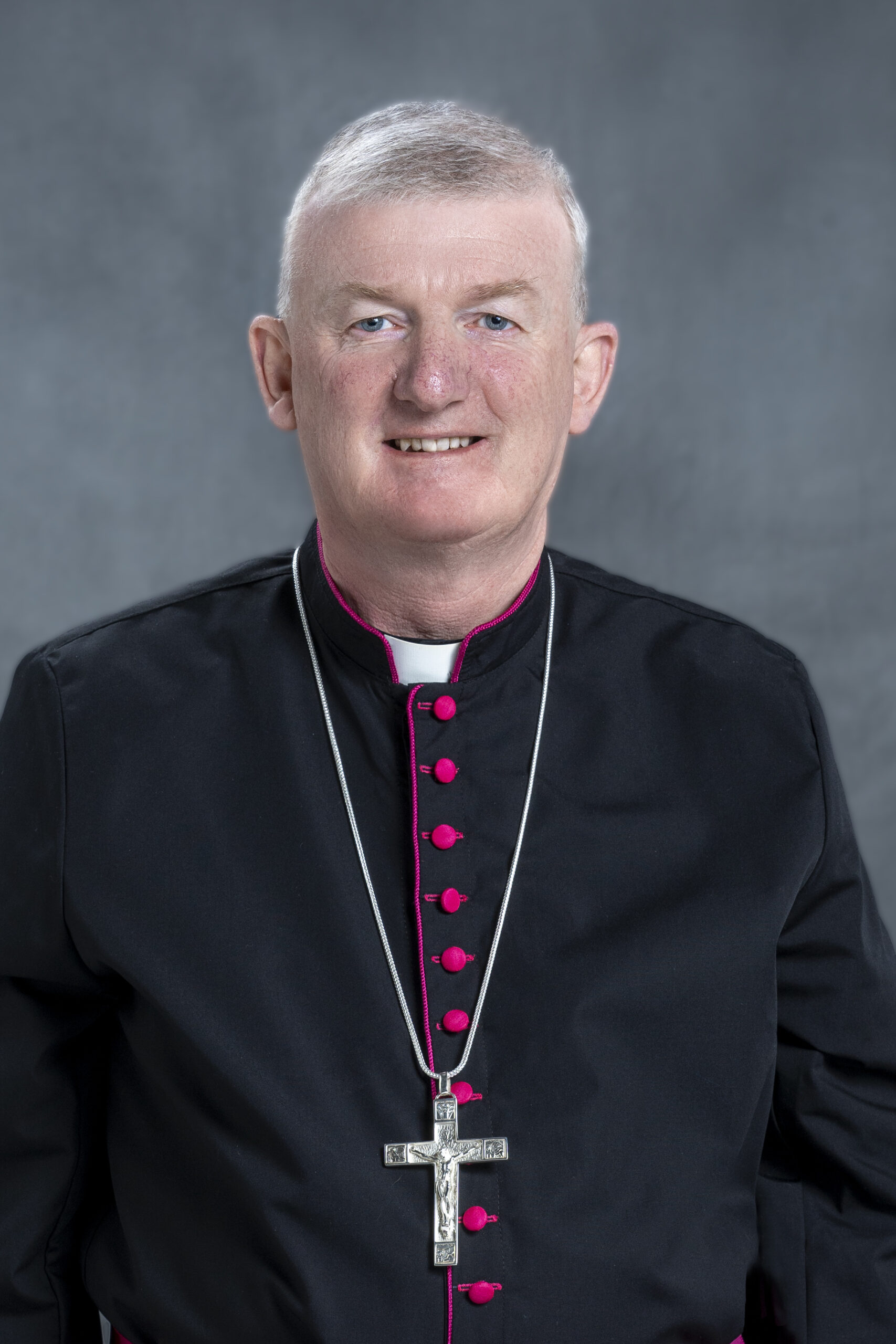
 I have been thinking about what I hope to have achieved by the time I finish my years as Bishop of Palmerston North. That is still some way off, but it is a useful question to ask.
One thing that keeps coming to mind is the relationship between our Catholic schools and our parishes.
We have around 7,000 people attending Mass across the Diocese, and almost 8,000 children in our Catholic school network. These are two great pillars of light. I would love to see them brought closer together.
Our Catholic schools do tremendous work, and I would like our parishes to be more involved in that work. At the same time, I would love to see the children and families in our Catholic schools more fully involved in parish life.
I keep thinking about Jesus’ parable of the wedding feast. The master prepares a great feast and invites people to come, but many make excuses. Eventually he sends his servants out to the highways and byways to invite people in.
There is something important in that image. The master knows that there is something wonderful on offer, and he wants people to experience it. His invitation is persistent, but it is not coercive. It is an encouragement born out of love.
I think we need something similar when it comes to our Catholic schools and Sunday Mass.
Looking ahead, I would like us to consider how we can make Sunday Mass a natural and expected part of what it means to enrol your child in a Catholic school. If you choose a Catholic school, you are choosing to enter into the life of the Catholic community. That includes the celebration of Mass and the sacraments.
This is not an unusual idea. In some Catholic schools, participation in chapel or liturgy is simply part of the life of the school. You have English, mathematics, science and physical education – and you have chapel. It is not an optional extra.
The Church has always understood that Catholic life is sacramental. It is difficult to imagine being fully engaged in Catholic life without regularly receiving the sacraments and participating in Sunday Mass.
At the same time, I want to be reasonable and pastoral about this. Families get sick, they go on holiday, and life gets complicated. I am not talking about imposing a stringent rule. I am talking about recovering an expectation and, more importantly, recovering a sense of what is being offered.
Imagine a parish welcoming 15 or 20 new families from a new school entrance class. Imagine those families arriving at Mass together and being genuinely welcomed. Imagine a parish ready with children’s liturgy, opportunities for families to meet one another, and a community that helps them find their place.
That could be transformative for both the families and the parish.
It could also open up a much wider vision of parish life. New young families bring new energy and new needs. How do we support parents? How do we care for marriage and family life? How do we respond to people from different cultures and backgrounds? How do we become more attentive to the social needs around us? How might organisations such as St Vincent de Paul become more closely connected with the life of the parish?
There is a whole world to be entered into.
The challenge is that the culture around us is changing. A generation ago, Sunday was much more obviously set aside for rest, family and worship. Today there are sports tournaments, shopping and countless other activities competing for our attention.
To practise our Catholic faith today requires us to make deliberate choices. I don’t think that is going away. If anything, we are moving further from a culture that naturally supports participation in Church life.
So I would like to take the long view. I don’t want to sail through my years as Bishop without exploring this question. I would love to see us recover a spirit in which going to Mass is understood as a normal and joyful part of being Catholic.
Perhaps that is part of what I am beginning to feel after three years in this Diocese.
Since my mother died recently, my connection with Christchurch has changed. I no longer have that familial link back to Christchurch, and although it will always be part of my story, I find myself increasingly thinking of Palmerston North and this Diocese as home.
I have made new friends here. I see our parishes beginning to ask what the Sunday experience is like. Are we becoming more closely connected? Are we gaining a sense of momentum? Are we excited about being Catholic and about what lies ahead? I hope so.
I am particularly encouraged by the opportunities we have coming up for our priests. Next January we will host a convocation bringing priests together for prayer and formation, including priests from around the country and experts from North America. They will spend time learning about the ministry of reconciliation, spiritual direction, the interior life and what it means to be a good priest.
The priesthood is an unusual life. It requires years of formation and involves sacrifices that most people will never be asked to make. But it is also a beautiful life. I was reminded of that again recently when a young man told me that he had dreamed he was going to become a priest. I told him that I thought he would make a wonderful priest. I am praying for him.
There will always be young men who are called to this particular adventure, just as there will always be people called to marriage and family life and to the many other vocations through which God builds up his Church.
I am grateful that the priesthood was my vocation. I have no regrets about it.
And I am grateful now to be here in this Diocese, looking ahead with hope to what God might do among us.