
Nestled beside the Manawatū River, near Our Lady of the Southern Star Abbey at Kopua, lies a small but significant remnant of New Zealand’s once vast 70 Mile Bush (Te Tapere Nui o Whatonga). Today this place – known as Kopua-riki – is becoming a powerful sign of hope: where ecological restoration, faith, and community action meet.
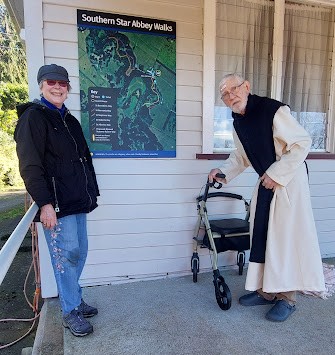 Kopua is home to New Zealand’s only Cistercian monastery. Founded in 1954 by Mount Melleray Abbey in Ireland, the community belongs to the worldwide Cistercian Order of the Strict Observance (also known as the Trappists).
At the heart of their life is a simple but profound calling: the search for God. The monks live a rhythm shaped by the Rule of St Benedict – prayer and work, silence and community, simplicity and hospitality. Their way of life is deeply attentive to place, grounded in a long tradition that sees the land not as something to use, but as something to receive, care for, and honour.
It is from this spiritual foundation that the Kopua Habitat Restoration Project has grown.
The land at Kopua is ecologically significant. It is a remnant of the great forest that once stretched across the lower North Island, a forest so rich that early travellers described it in awe. Mark Twain, passing through in 1895, wrote of “wonderfully dense and beautiful forests … tree ferns everywhere.”
Today, that forest is mostly gone. What remains at Kopua is a small fragment – about 13–15 hectares – described as an “oasis of biodiversity” surrounded by farmland, but under pressure from invasive weeds and introduced pests.
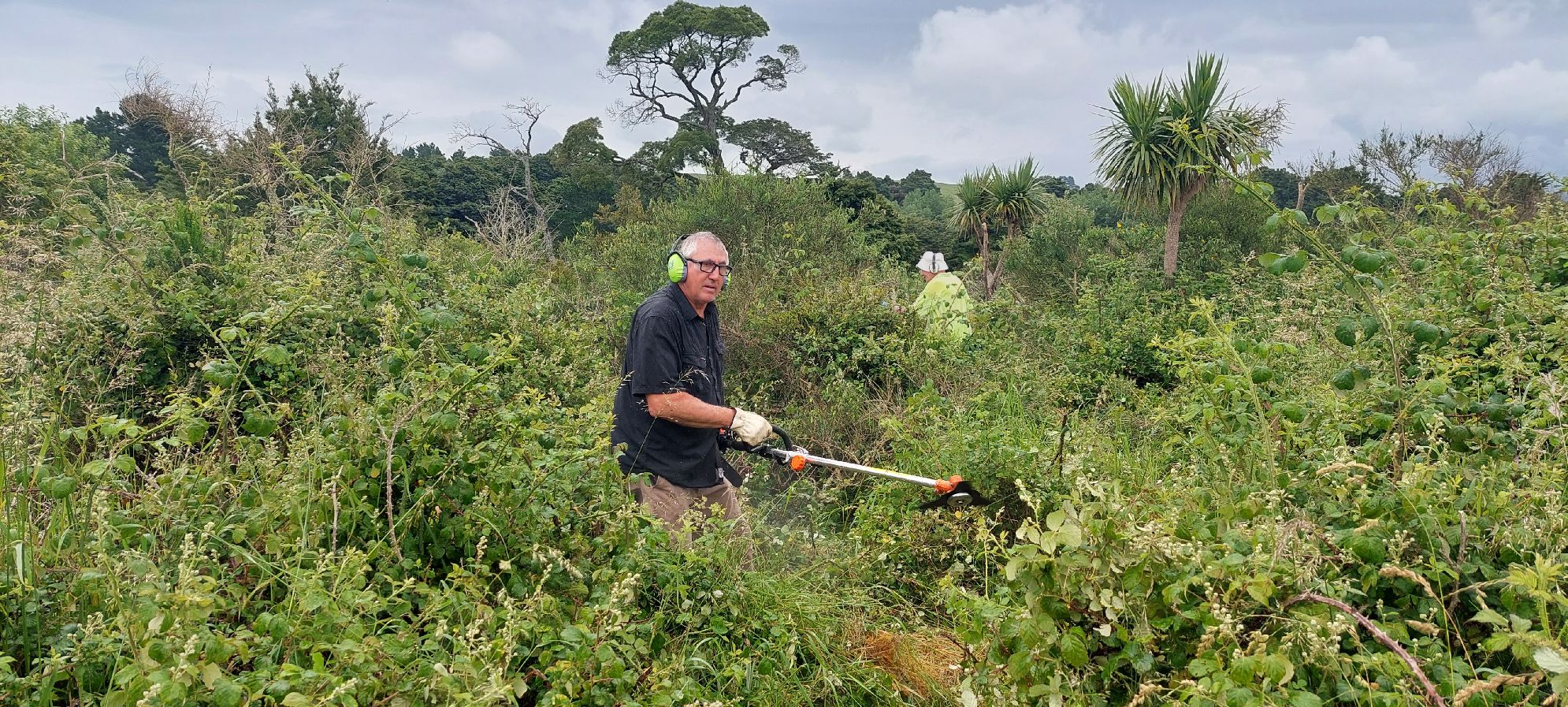
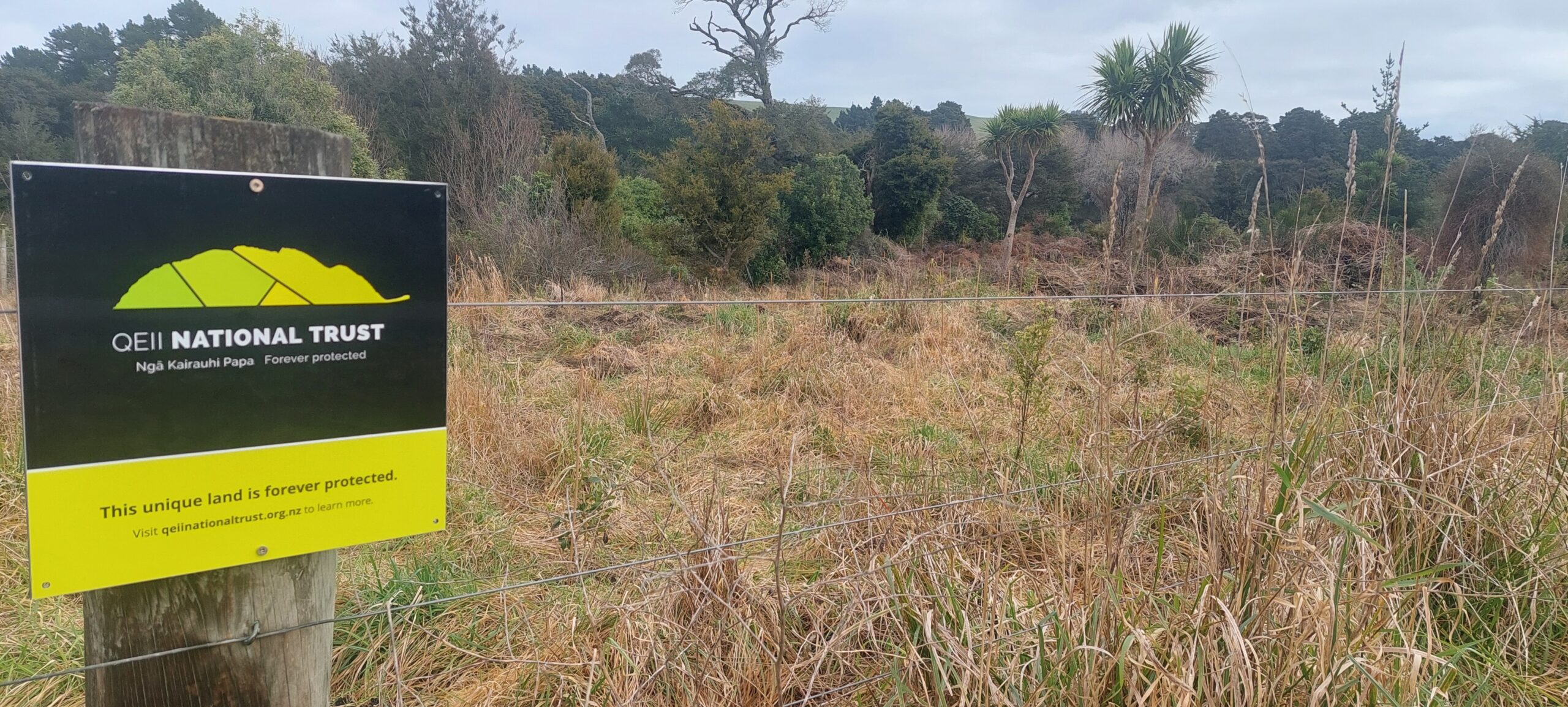
Before and after: clearing out blackberry to make way for planting in July.
The Kopua Habitat Restoration Project is a long-term effort to restore this precious remnant – not just for today, but for generations to come. Its vision stretches boldly into the future: that in 200 years, visitors will once again encounter a thriving native forest, alive with birdsong, layered vegetation, and towering kahikatea and tōtara.
Central to this vision is also a special memorial forest honouring Suzanne Aubert (Merī Hohepa). Merī Hohepa was deeply connected to the land and to rongoā Māori (traditional plant-based healing), and the project aims to include an area where medicinal plants can be grown, shared, and understood.
The restoration work is already well underway. Since 2022, volunteers and supporters have been working together to:
- Remove major invasive weeds such as blackberry, gorse, and willow
- Establish traplines to reduce pest animals that threaten native wildlife
- Plant hundreds of eco-sourced native trees each year
- Develop walking tracks and a future “Rongoā Hikoi” pilgrimage pathway
- Monitor birdlife through regular counts, tracking the return of native species
The results are encouraging. Native bird sightings are increasing, rare insects have been observed, and the beginnings of a healthier ecosystem are emerging. More than 1,300 volunteer hours have already been contributed – a remarkable expression of shared commitment.
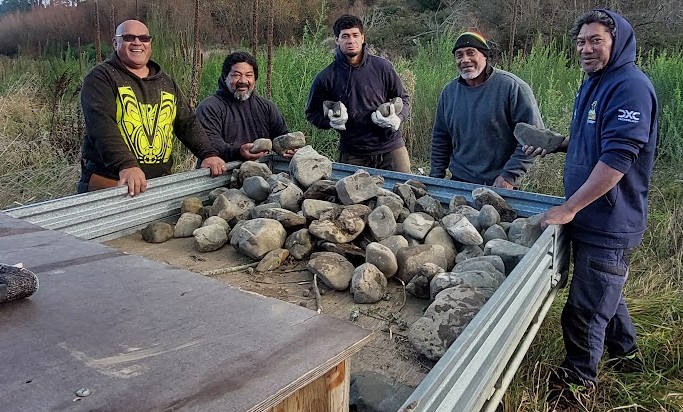
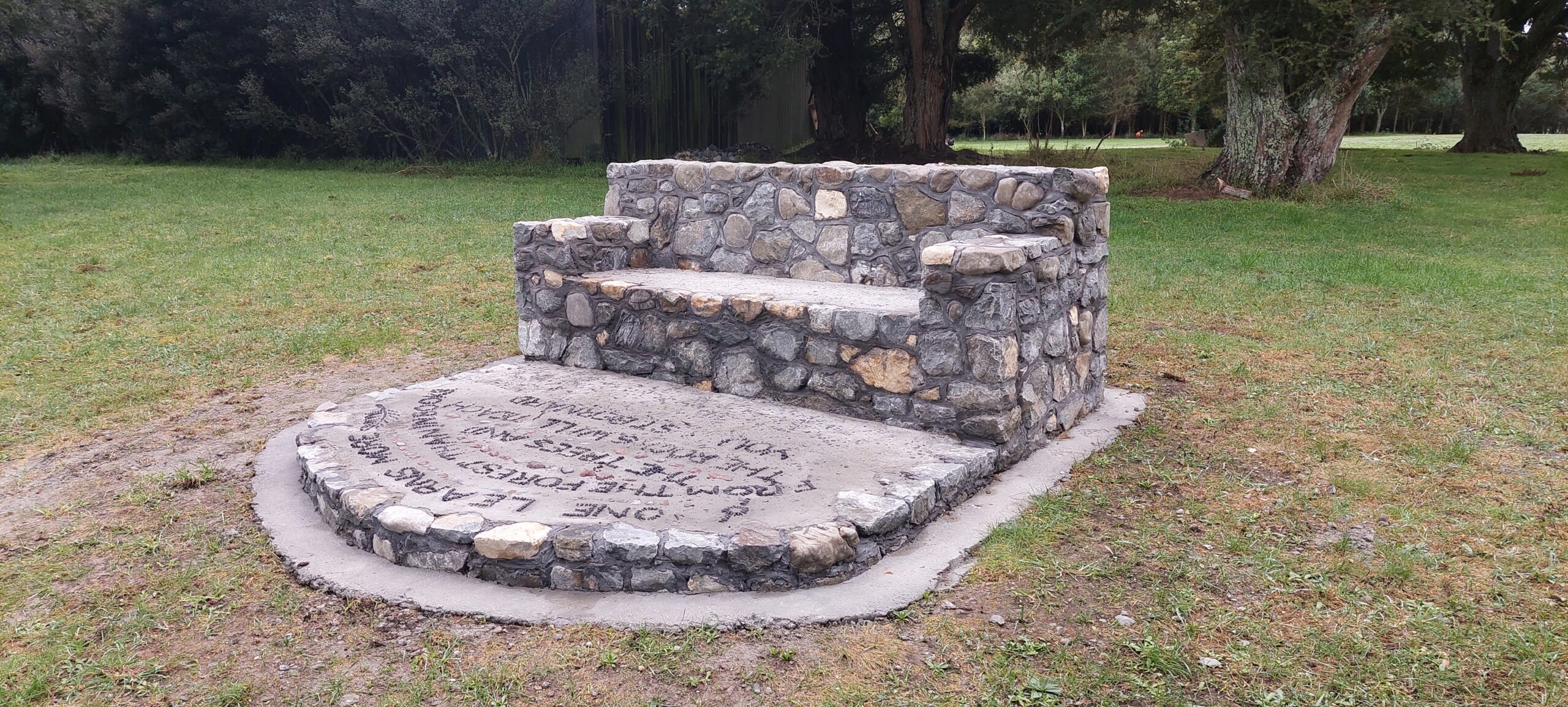
Stones from the Manawatū river being collected (left) to build a mounment to St Bernard (above)
The restoration of Kopua is not the work of one group alone. It brings together monks, local iwi, environmental groups, schools, and volunteers – each contributing their skills, time, and care.
In many ways, this collaboration reflects the Benedictine spirit itself: a shared life of responsibility for one another and for the land we inhabit.
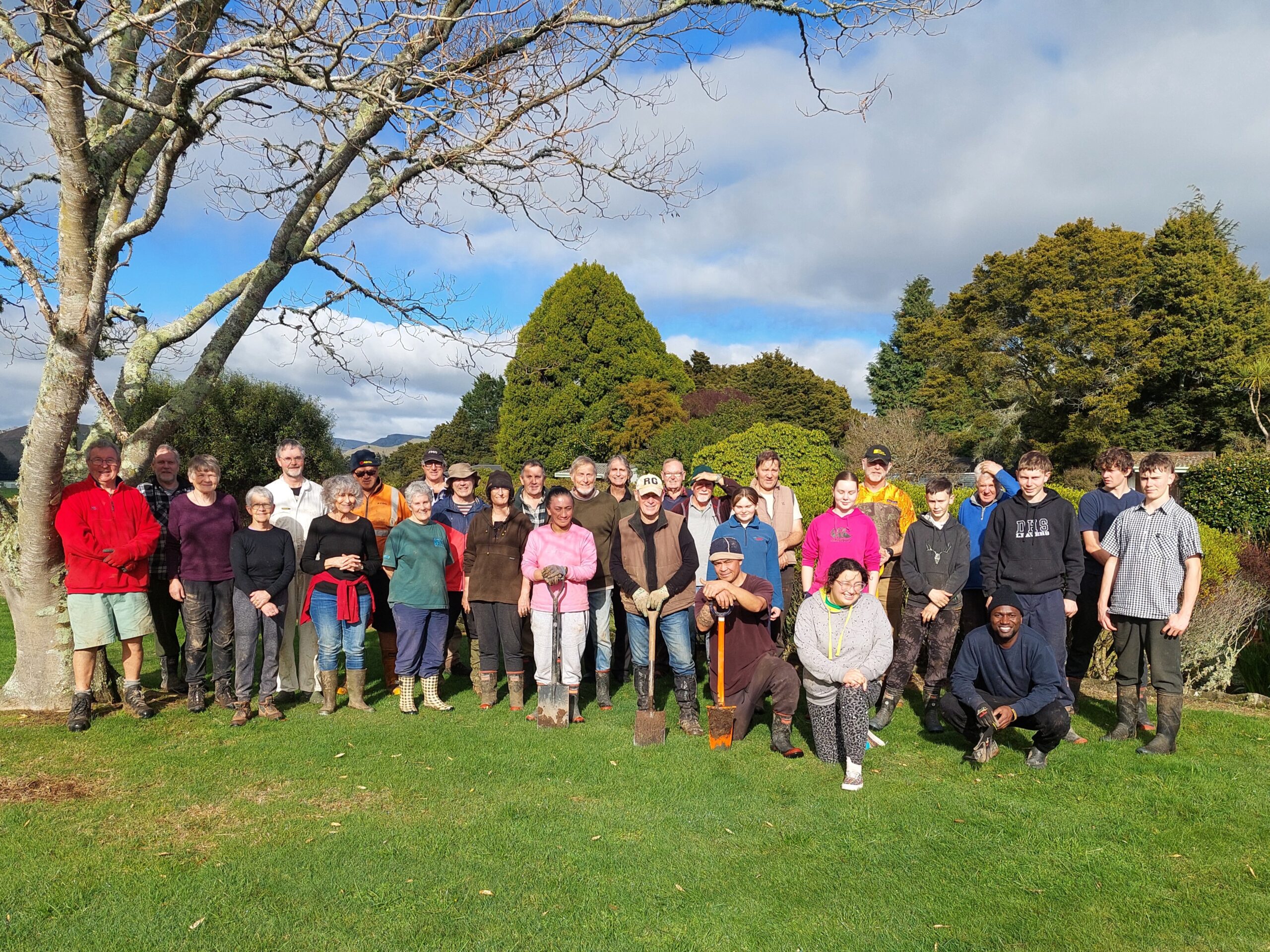
The large group of volunteers who attended the working bee over Matariki weekend in 2024, including people from St Joseph’s Parish Dannevirke; Kopua Associates, Companions, Monastic Community and Whanāu; A Rocha Wellington and Palmerston North; and PN Young Catholics.
How You Can Be Part of It
The continued success of the Kopua Habitat Restoration Project depends on the wider community. There are many ways to support this work:
- Join a Working Bee: Regular working days welcome volunteers of all ages and abilities—whether for planting, weeding, or track maintenance.
- Support Financially: The project relies on ongoing funding for plants, pest control, and volunteer support.
- Share Your Skills: From practical conservation work to communications and fundraising, many gifts are needed.
- Bring a Group: Parish groups, schools, and families can visit, learn, and contribute—helping the next generation engage with care for creation.
- Pray and Advocate: Supporting the project spiritually and sharing its story helps build awareness and connection.
In many ways, the Kopua Habitat Restoration Project is a quiet but powerful sign of hope. It reminds us that restoration is possible – even where loss has been great. It reflects Pope Francis’ call in Laudato Si’ to care for our common home, not just in words but in sustained, practical action.
Kopua-riki may be small, but – as its name suggests – it is part of something much larger. Through the care of many hands and hearts, it is becoming once again a place where life flourishes, where prayer and nature meet, and where future generations may hear what early visitors described so vividly: the rich, living song of the forest.
The next working bee will take place over Matariki weekend, Friday 10 and Saturday 11 July (9am – 3pm).
Please register with stonem@xtra.co.nz before 4 July for catering purposes.
Photos provided by Mike Stone. Header photo by Murray Adams.